Eurasian Wren — Troglodytes troglodytes: Complete Identification Guide LC
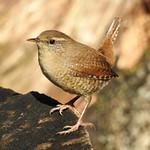
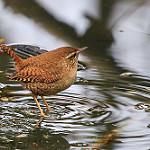
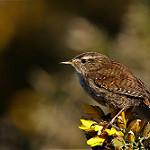
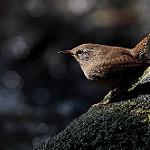
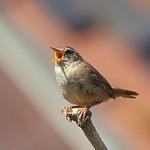
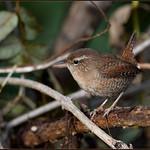
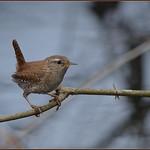
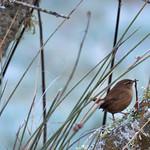
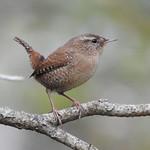
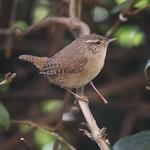
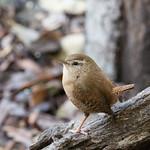

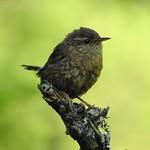
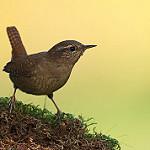
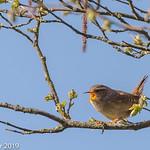
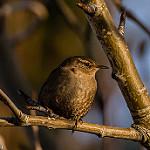
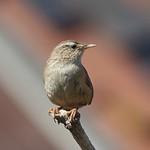
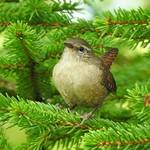
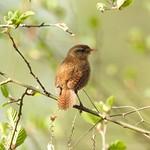
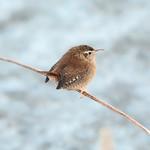
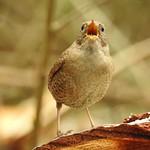
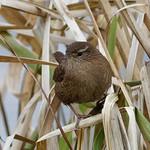
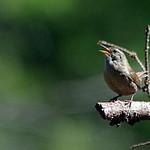

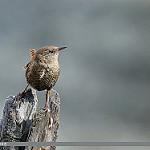
The Eurasian Wren is a tiny, energetic woodland songbird known for its surprisingly powerful voice. This guide covers ID features, behaviour, feeding habits, nesting, range, and high-quality audio recordings available directly on this page.
Identification: How to Recognize a Eurasian Wren
Appearance
- Size: 9–11 cm — extremely small and round-bodied
- Plumage: warm brown with fine barring on wings and flanks
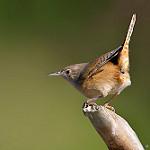
- Tail: very short and often held cocked upright
- Bill: thin and slightly curved, ideal for probing crevices for insects
Distinguishing from Similar Species
- Differs from Dunnock — much smaller and more rounded, with a cocked tail
- Differs from Goldcrest — lacks the yellow crown and has stronger vocalizations
Habitat & Distribution
The Eurasian Wren is widespread across Europe, Asia, and parts of North Africa. It thrives in dense vegetation: undergrowth, thickets, forest edges, hedgerows, parks, gardens, and riverbanks.
Where to Find It
- Dense shrubs and woodland undergrowth
- Hedgerows and tangled vegetation
- Urban parks with plenty of cover
Behaviour & Diet
Diet
- Insects and larvae
- Small spiders
- Occasional seeds and berries during harsh winters
Typical Behaviour
- Highly active forager, moving rapidly through dense vegetation
- Known for its iconic cocked tail and quick darting movements
- Male sings loudly to defend territory and attract females
Breeding & Nesting
Eurasian Wrens build dome-shaped nests with a small side entrance. Males may construct several “dummy nests,” allowing the female to choose the final one. A clutch typically contains 5–7 eggs.
Nesting Season & Behaviour
- Breeding season: spring through early summer
- Males construct multiple nests to impress females
- Both parents feed the chicks after hatching
Song & Calls — Listen on This Page
The Eurasian Wren produces a remarkably loud and complex song packed with rapid trills, whistles, and phrases. Despite its tiny size, its volume is among the strongest of all European songbirds. High-quality audio recordings are available directly on this page.
Birdwatching Tips
- Search in dense undergrowth — wrens stay close to cover
- Use your ears first: the song often reveals the bird before you see it
- Early morning is the best time to hear territorial males
Conservation Status
The Eurasian Wren remains common across its range. Local declines may occur due to loss of dense vegetation, severe winters, or habitat fragmentation. Maintaining thick shrubs and natural undergrowth supports stable populations.
Frequently Asked Questions
Where can I listen to the song of the Eurasian Wren?
What does the Eurasian Wren eat?
How can you tell male and female wrens apart?
When do wrens breed and how many eggs do they lay?
Do Eurasian Wrens harm gardens or other birds?
- Synonyms Common Wren, Winter Wren (Eurasian), Winter Wren, Wren, Northern Wren
- Old latin name for bird Sylvia troglodytes, Troglodytes naumanni, Troglodytes regulus, Troglodytes communis, Troglodytes tenuirostris, Troglodytes verus, Troglodytes vulgaris, Troglodytes domesticus, Troglodytes sylvestris, Troglodytes europaeus, Anorthura troglodytes, Troglodytes parvulus, Anothura troglodytes, Motacilla troglodytes, Anorthura communis
Eurasian Wrenbird sounds *
Related species



Where to see Eurasian Wren
- Breeding region Eurasia
- Breeding subregion widespread
- Afghanistan
- Albania
- Algeria
- Andorra
- Armenia
- Austria
- Azerbaijan
- Bangladesh
- Belarus
- Belgium
- Bhutan
- Bosnia and Herzegovina
- Bulgaria
- China
- Croatia
- Cyprus
- Czechia
- Denmark
- Egypt
- Estonia
- Faroe Islands
- Finland
- France
- Georgia
- Germany
- Gibraltar
- Greece
- Guernsey
- Hungary
- Iceland
- India
- Iran
- Iraq
- Ireland
- Isle of Man
- Israel
- Italy
- Japan
- Jersey
- Jordan
- Kazakhstan
- Kuwait
- Kyrgyzstan
- Latvia
- Lebanon
- Libya
- Liechtenstein
- Lithuania
- Luxembourg
- Malta
- Moldova
- Monaco
- Mongolia
- Montenegro
- Morocco
- Myanmar
- Nepal
- Netherlands
- North Korea
- North Macedonia
- Norway
- Pakistan
- Palestine, State of
- Poland
- Portugal
- Romania
- Russia
- San Marino
- Serbia
- Slovakia
- Slovenia
- South Korea
- Spain
- Sweden
- Switzerland
- Syria
- Taiwan
- Tajikistan
- Tunisia
- Turkey
- Turkmenistan
- Ukraine
- United Kingdom
- Uzbekistan
- Åland Islands
Eurasian Wren subspecies (28)
| Subspecies | Breeding subregion | Nonbreeding subregion | Extinct |
|---|---|---|---|
| Troglodytes troglodytes borealis | Faroe Is. | - | No |
| Troglodytes troglodytes cypriotes | Cyprus, w, s Turkey to n Israel | - | No |
| Troglodytes troglodytes dauricus | se Siberia, ne China, Korea and Tsushima (sw Japan) | - | No |
| Troglodytes troglodytes fridariensis | Fair I. (s of the Shetland Is.) | - | No |
| Troglodytes troglodytes fumigatus | s Kuril Is., Sakhalin and Japan | - | No |
| Troglodytes troglodytes hebridensis | Outer Hebrides except St. Kilda (off w Scotland) | - | No |
| Troglodytes troglodytes hirtensis | St. Kilda I. (Outer Hebrides off w Scotland) | - | No |
| Troglodytes troglodytes hyrcanus | Crimean Pen., n Turkey, Caucasus and n, w Iran | - | No |
| Troglodytes troglodytes idius | nc China | - | No |
| Troglodytes troglodytes indigenus | Ireland and Britain | - | No |
| Troglodytes troglodytes islandicus | Iceland | - | No |
| Troglodytes troglodytes juniperi | ne Libya | - | No |
| Troglodytes troglodytes kabylorum | nw Africa, Balearic Is. and s Spain | - | No |
| Troglodytes troglodytes koenigi | Corsica and Sardinia | - | No |
| Troglodytes troglodytes kurilensis | n Kuril Is. | - | No |
| Troglodytes troglodytes magrathi | se Afghanistan and w Pakistan | - | No |
| Troglodytes troglodytes mosukei | Izu Is. (Japan) | - | No |
| Troglodytes troglodytes neglectus | w Himalayas | - | No |
| Troglodytes troglodytes nipalensis | c, e Himalayas | - | No |
| Troglodytes troglodytes ogawae | Yakushima and Tanegashima (Osumi Is., s Japan) | - | No |
| Troglodytes troglodytes pallescens | Kamchatka Pen. and Commander Is. | - | No |
| Troglodytes troglodytes subpallidus | ne Iran to s Uzbekistan and nw Afghanistan | - | No |
| Troglodytes troglodytes szetschuanus | wc China | - | No |
| Troglodytes troglodytes taivanus | Taiwan | - | No |
| Troglodytes troglodytes talifuensis | s China and ne Myanmar | - | No |
| Troglodytes troglodytes tianschanicus | ne Afghanistan to mountains of c Asia | - | No |
| Troglodytes troglodytes troglodytes | most of mainland Europe | - | No |
| Troglodytes troglodytes zetlandicus | Shetland Is. | - | No |
Species Name in Other Languages
| Language | Translation |
|---|---|
| Abkhazian | аҰынұа |
| Albanian | Çerri |
| Arabic | العندليب, صعو اوراسي |
| Armenian | Եղնջա ռչնակ, Եղնջաթռչնակ |
| Azerbaijani | Adi bilibitdan, bilibitdan, Adi birəbitdən, adi bilibittan, birəbitdən |
| Bashkir | кесерткән турғайы |
| Basque | Txepetxa, Txepetx |
| Belarusian | Крапіўнік, Крапiўнiк, Крапiўнiк (або валавока) |
| Breton | Laouenan troc'hanik, Al laouenan troc'hanik |
| Bulgarian | Орехче |
| Catalan | Cargolet comú, cargolet |
| Chinese | 布母, 巧妇鸟, 鷦鷯, 鹪鹩, 桑飞, 巧妇 |
| Chinese (Traditional) | 鷦鷯, 桑飛, 巧婦鳥, 布母, 巧婦 |
| Chuvash | вĕтрен-кайăкĕ, вĕлтрен кайăк, вĕлтĕрен тăрри, вĕлтрен-кайăкĕ, вĕлтрентăрри кайăкĕ, вĕлтрентăрри, вĕлтĕрен кайăкĕ, вĕлтрен тăрри, вĕлтрен кайăкĕ |
| Cornish | Gwrannen |
| Croatian | palčić |
| Czech | Strízlík obecný, střízlík obecný |
| Danish | Gærdesmutte |
| Dutch | Winterkoning |
| Esperanto | Vintra troglodito, troglodito |
| Estonian | käblik |
| Faroese | Músabróðir |
| Finnish | peukaloinen |
| French | Troglodyte mignon |
| Frisian | Tomke |
| Galician | Carriza, Carriza común |
| Georgian | ჭინჭრაქა, ღობემძვრალა |
| German | Zaunkönig |
| Greek | Τρυπoφράχτης, Τρυποφράχτης |
| Hebrew | גדרון מובהק, גדרון |
| Hungarian | ökörszem |
| Icelandic | Músarrindill |
| Irish | Dreoilín |
| Italian | Scricciolo comune, Scricciolo |
| Japanese | ショウリョウ, カキチンナイ, ミソッチョ, ミソサザイ |
| Kazakh | секпіл торғай, Үнгірек, кәдімгі үңгірек, үңгірек |
| Korean | 굴뚝새 |
| Latvian | paceplītis |
| Lithuanian | paprastoji karietaitė, Karetaitė, Karietaitė, Karietaite |
| Luxembourgish | Zonkebutz, Maiskinnek |
| Macedonian | царче, Палче–оревче |
| Maltese | Bumistur, għasfur tal-maltemp |
| Manx | Drean |
| Mongolian | уран шувуу II, борной, уран шувуухай, Уран бялзуухай, харцар, Халгайч урагчин, харцар бялзүүхай |
| Nepali | चित्री |
| Northern Sami | Bealgeloddi |
| Norwegian | gjerdesmett |
| Norwegian Nynorsk | Gjerdesmett |
| Persian | الیکایی |
| Polish | strzyzyk zwyczajny, strzyżyk zwyczajny, strzyzyk, strzyżyk (zwyczajny), strzyżyk |
| Portuguese | Carriça, carriça-eurasiática |
| Romanian | Ochiuboului |
| Romansh | Poleschet |
| Russian | Крапивник, Обыкновенный крапивник |
| Serbian | Carić |
| Slovak | oriešok obyčajný, oriešok hnedý |
| Slovenian | stržek |
| Spanish | Chochín paleártico, Chochín Común |
| Swedish | gärdsmyg |
| Tatar | кычыткан чыпчыгы |
| Turkish | Çıtkuşu, Үнгірек, Çitkuşu |
| Ukrainian | волове очко, Кропивник |
| Uzbek | қичитқон |
| Welsh | Dryw |