Ring Ouzel / Turdus torquatus LC
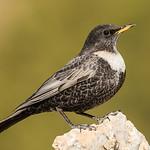
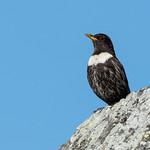
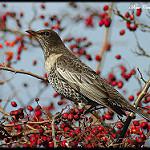
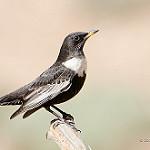
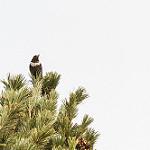
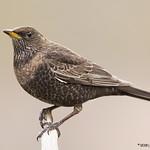
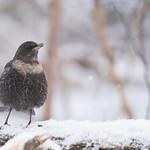
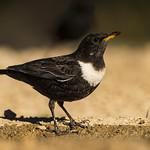
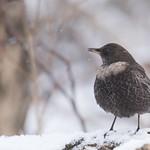
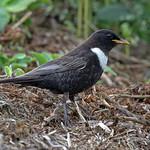
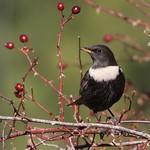
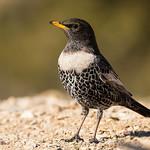
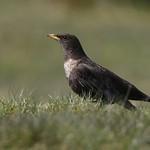
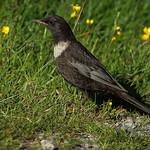
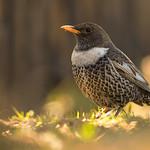
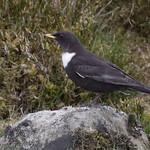
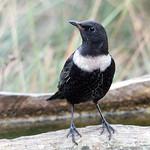
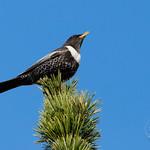
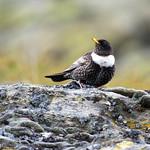
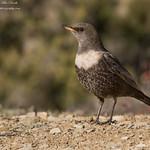
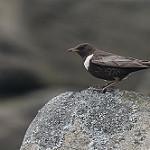
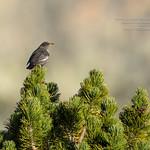
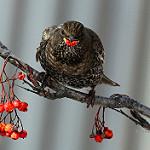
The Ring Ouzel (Turdus torquatus) is a medium-sized thrush, easily recognized by its dark plumage and striking white crescent across the chest. This elegant bird inhabits upland and mountain regions across Europe and parts of Asia. Its melodious song and shy nature make it a treasured sight among birdwatchers.
Species Overview
The Ring Ouzel measures about 23–26 cm in length and resembles a blackbird but can be distinguished by its lighter edges on feathers and the bright white ‘ring’ on its breast. Females and juveniles are duller and browner, often with a faint crescent marking.
- Body length: 23–26 cm
- Wingspan: up to 40 cm
- Weight: 90–130 g
- Plumage: dark brown to black with a white crescent
- Lifespan: up to 8 years
Habitat and Distribution
Ring Ouzels breed in mountainous and upland regions of northern and central Europe, from the British Isles to Scandinavia and the Caucasus. They prefer open landscapes with heather, rocky slopes, and scattered shrubs. During winter, they migrate to southern Europe and North Africa.
- Range: Europe and parts of Asia
- Habitat type: upland moorlands, mountain slopes, heaths
- Wintering grounds: Southern Europe, North Africa
- Migration type: long-distance migratory
Diet
The Ring Ouzel has an omnivorous diet. During spring and summer, it feeds mainly on insects, earthworms, and spiders. In autumn, it switches to berries and fruits, especially rowan, juniper, and bilberries.
- Main diet: insects, worms, spiders
- Additional food: berries, fruits, seeds
- Feeding type: omnivorous
Breeding
Breeding starts in May. The female builds a cup-shaped nest from grass, moss, and mud, usually low in a bush or on a rocky ledge. A clutch consists of 4–6 blue-green eggs, incubated by the female for about two weeks. Fledglings leave the nest roughly two weeks after hatching.
- Breeding season: May–July
- Clutch size: 4–6 eggs
- Nest materials: grass, moss, mud
- Nest location: shrubs, cliffs, mountain slopes
Song and Calls
The Ring Ouzel’s song is rich and flute-like, resembling the Blackbird but with shorter, more plaintive notes. You can listen to recordings of the Ring Ouzel’s voice directly on this page — no external links required.
Interesting Facts
- The white chest crescent gives the species its name — “torquatus” means “collared” in Latin.
- Ring Ouzels are often called “mountain blackbirds” due to their similar shape and song.
- They migrate thousands of kilometers between breeding and wintering grounds.
- Their numbers have declined in parts of Europe due to habitat loss and climate change.
Conservation Status
The Ring Ouzel is not globally threatened but is considered a species of conservation concern in several European countries. Habitat loss, grazing pressure, and changes in upland vegetation have led to population declines in recent decades.
Frequently Asked Questions about the Ring Ouzel
Where does the Ring Ouzel live?
Ring Ouzels inhabit upland and mountain areas across northern and central Europe, including the UK, Scandinavia, and the Alps. They migrate south to the Mediterranean and North Africa for winter.
What does the Ring Ouzel eat?
Their diet consists mainly of insects, earthworms, and spiders, supplemented by berries and fruits in autumn and winter.
How does the Ring Ouzel sound?
The Ring Ouzel’s song is a beautiful, flute-like series of phrases, softer and more melancholy than the Blackbird’s. You can listen to the recordings on this page.
When do Ring Ouzels migrate?
They arrive in their breeding areas in April–May and depart for southern regions in September–October.
- Synonyms Ring Ousel, Ring Thrush
Ring Ouzelbird sounds *
Related species



Where to see Ring Ouzel
- Breeding region Eurasia
- Breeding subregion w, sw
- Non breeding region n AF
- Albania
- Algeria
- Andorra
- Armenia
- Austria
- Azerbaijan
- Bahrain
- Belarus
- Belgium
- Bosnia and Herzegovina
- Bulgaria
- Croatia
- Cyprus
- Czechia
- Denmark
- Egypt
- Estonia
- Faroe Islands
- Finland
- France
- Georgia
- Germany
- Gibraltar
- Greece
- Guernsey
- Hungary
- Iceland
- Iran
- Iraq
- Ireland
- Isle of Man
- Israel
- Italy
- Jersey
- Jordan
- Kazakhstan
- Kuwait
- Latvia
- Lebanon
- Libya
- Liechtenstein
- Lithuania
- Luxembourg
- Malta
- Mauritania
- Moldova
- Montenegro
- Morocco
- Netherlands
- North Macedonia
- Norway
- Oman
- Palestine, State of
- Poland
- Portugal
- Qatar
- Romania
- Russia
- Saudi Arabia
- Senegal
- Serbia
- Slovakia
- Slovenia
- Spain
- Sudan
- Svalbard and Jan Mayen
- Sweden
- Switzerland
- Syria
- Tajikistan
- Tunisia
- Turkey
- Turkmenistan
- Ukraine
- United Arab Emirates
- United Kingdom
- Western Sahara
- Åland Islands
Ring Ouzel subspecies (3)
| Subspecies | Breeding subregion | Nonbreeding subregion | Extinct |
|---|---|---|---|
| Turdus torquatus alpestris | n Spain and c Europe to Greece and w Turkey | to n Africa | No |
| Turdus torquatus amicorum | c Turkey to Turkmenistan and n Iran | to sw Asia | No |
| Turdus torquatus torquatus | w, n Europe | to s Europe and nw Africa | No |
Species Name in Other Languages
| Language | Translation |
|---|---|
| Abkhazian | Ардәынахәүыш, ардәына хәүыш |
| Afrikaans | Ringlyster |
| Albanian | Mëllënja qafore, Tusha gushëbardhë |
| Arabic | الشحرور أبيض الحنجرة, سمنة مطوقة |
| Armenian | Սպիտակախածի Կեռնեխ, [Spitakakhatzi Kernekh ] |
| Azerbaijani | Ağdöş qaratoyuğu, Ağdöş qaratoyuq |
| Bashkir | аҡбоғаҡ барҡылдаҡ |
| Basque | Zozo paparzuria, Merla de pit blanc , Zozo paparzuri |
| Belarusian | Белаваллёвы дрозд |
| Breton | Ar voualc'h-venec, Moualc'h-venez |
| Bulgarian | Белогуш дрозд |
| Catalan | Tord flassader, merla de pit blanc |
| Chinese | 环颈鸫 |
| Chinese (Traditional) | 環頸鶇 |
| Cornish | Molgh meneth |
| Croatian | planinski kos |
| Czech | kos horský, drozd horský, kolohřivec |
| Danish | Ringdrossel |
| Dutch | Beflijster |
| Esperanto | rubandoturdo |
| Estonian | kaelusrästas |
| Faroese | Sigdartrøstur |
| Finnish | sepelrastas |
| French | Merle à plastron |
| Frisian | Dominylyster |
| Galician | Merlo de colar, Melro de papo branco, Merlo papobranco, melro papobranco, Merla de pit blanc |
| Georgian | თეთრგულა შაშვი, ჩხურუშტი |
| German | Ringamsel, Ringdrossel |
| Greek | Χιονοκότσυφας, Βουνότζικλα, Χιovoκότσυφας, Χιονότσιχλα |
| Hebrew | קיכלי סהרון, קכלי סהרון |
| Hungarian | örvös rigó |
| Icelandic | Mánaþröstur |
| Irish | Smólach uchtbhán, Lon Creige |
| Italian | Merlo dal collare |
| Japanese | クビワツグミ |
| Kazakh | Ақжемсаулы сайрақ |
| Latvian | apkakles strazds |
| Lithuanian | baltagurklis strazdas |
| Luxembourgish | Réngmärel |
| Macedonian | Планински кос, Белогушест дрозд, белограден ќос |
| Maltese | Malvizz tas-Sidra Bajda, Malvizz tas-Sidra |
| Manx | Lhon fainnit |
| Northern Sami | Gierdorásttis |
| Norwegian | ringtrost |
| Norwegian Nynorsk | Ringtrast |
| Persian | توکای طوقی |
| Polish | Obrożnik, drozd obrożny, drozd obrozny |
| Portuguese | Melro-de-peito-branco, melro de peito branco, melro-de-colar |
| Romanian | Mierlă gulerată |
| Romansh | tursch da cularin, Tursch dal cularin |
| Russian | Дрозд белозобый, Белозобый дрозд, Belozoby Drozd |
| Serbian | ogrlicasti kos, Kos ogrličar, drozd ogrlicar, Планински дрозд, planinski drozd, Дрозд огрличар, drozd ogrličar |
| Slovak | drozd kolohrivec, drozd kolohrivý |
| Slovenian | komatar |
| Spanish | Mirlo capiblanco, Mirlo de Capa Blanca, Mirlo de collar |
| Swedish | ringtrast |
| Turkish | Kolyeli Ardıç Kuşu, Boğmaklı Ardıç, boğmakly ardyç, Boşmaklı Ardıç |
| Turkmen | ak petekeli jokjoky |
| Ukrainian | дрізд гірський, Гірський дрізд |
| Uzbek | оқтомоқ қораялоқ |
| Welsh | Mwyalchen y mynydd, Mwyalchen y graig |