New DiBird mobile app is now available — iOS & Android
Better on the app — your life list in your pocket. Download DiBird free
Corncrake (Crex crex): Identification, Habitat, Call & Migration Guide LC
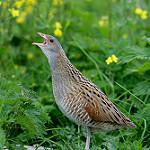
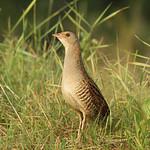
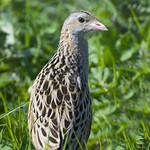
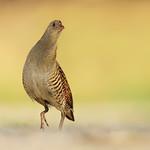
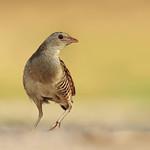
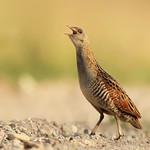
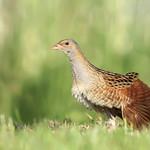
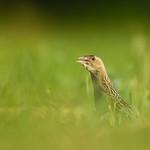
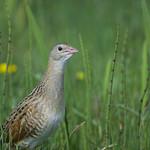
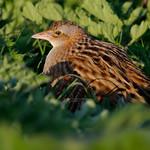
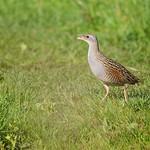
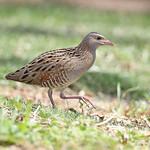
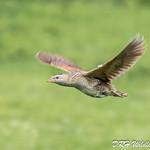
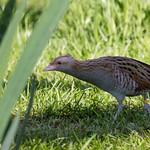
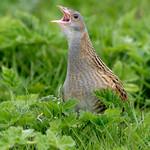
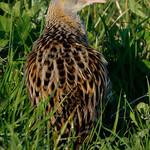
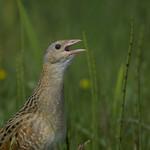
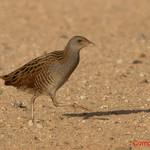
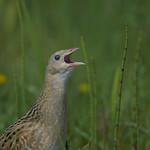
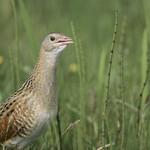
The Corncrake (Crex crex) is one of Europe’s most elusive grassland birds. Known for its distinctive rasping call and secretive lifestyle, this species is often heard long before it is seen. Below you will find a fully detailed, expert-level guide created to match popular search queries, long-tail questions, and LSI keywords used by birdwatchers, ornithologists, and nature enthusiasts.
How to Identify a Corncrake
Although the Corncrake resembles a small rail, its coloration and behaviour make it unique. Because the bird rarely leaves dense vegetation, proper identification requires listening skills as much as visual observation.
Main Identification Features
- Size: 27–30 cm, similar to a small partridge.
- Plumage: Warm brown upperparts with black streaks, pale buff belly.
- Distinctive Marks: Blue-grey cheeks and neck, reddish-brown wings visible in flight.
- Gait: Fast running, rarely flies unless flushed.
Habitat and Distribution
Corncrakes prefer tall grasslands, hay meadows, damp pastures, and agricultural fields. Their range covers much of Europe and extends into western Asia during the breeding season.
Typical Habitats
- Unmown meadows with dense vegetation
- River valleys and wet lowlands
- Traditional farmland with late hay cutting
- Tall herbs, nettle beds, and sedge marsh edges
Corncrake Call: What Does a Corncrake Sound Like?
The Corncrake’s call is one of the most recognisable bird sounds in Europe: a repetitive “crex-crex” that can continue throughout the night. Since the species is difficult to see, most birders detect it by voice alone.
Feeding Behavior
Corncrakes are omnivores with a preference for small invertebrates. Their diet changes seasonally depending on food availability.
What Do Corncrakes Eat?
- Beetles and other ground insects
- Earthworms
- Spiders and small mollusks
- Seeds and plant shoots
Nesting and Breeding
Corncrakes are ground-nesting birds, building a well-hidden nest among tall grasses. Females raise the brood alone.
Breeding Facts
- Nest type: Shallow grass cup concealed in dense vegetation.
- Clutch size: 8–12 eggs.
- Incubation: About 19 days.
- Chicks: Precocial, leave nest shortly after hatching.
Migration Patterns
Corncrakes migrate long distances between Europe and Africa. Most individuals winter in the savannas of central and southeastern Africa.
When Do Corncrakes Migrate?
- Spring arrival: Late April to early June.
- Autumn departure: August to September.
- Migration mostly takes place at night.
Interesting Facts
- One of the loudest grassland birds relative to body size.
- Calls may continue for hours without pause.
- Often confused with quail due to similar habitat.
- Populations depend heavily on late hay-cutting practices.
Frequently Asked Questions about the Corncrake
Why is the Corncrake difficult to see?
Corncrakes hide in tall vegetation and rarely expose themselves. They prefer running to flying, which makes visual encounters uncommon.
Where can I hear the Corncrake call?
The rasping “crex-crex” call can be heard in meadows, pastures, and agricultural fields across Europe during spring and early summer.
Are Corncrake populations declining?
Yes, primarily due to habitat loss and early mowing practices that destroy nests. Conservation programs focus on promoting wildlife-friendly agriculture.
Do Corncrakes migrate long distances?
Yes. They travel between Europe and sub-Saharan Africa, covering thousands of kilometers each year.
- Synonyms Landrail, Land Rail, European Corn Crake, Grass quail, Corncrake
- Old latin name for bird Rallus crex, Rallus featherstonii, Crex pratensis
Corn Crakebird sounds *
Where to see Corn Crake
- Breeding region Eurasia
- Breeding subregion Europe to c Siberia and nw China
- Non breeding region s AF
- Afghanistan
- Albania
- Algeria
- Angola
- Armenia
- Australia
- Austria
- Azerbaijan
- Bahrain
- Belarus
- Belgium
- Bermuda
- Bosnia and Herzegovina
- Botswana
- Brazil
- Bulgaria
- Burundi
- Cameroon
- Canada
- Chad
- China
- Cocos (Keeling) Islands
- Congo
- Congo (the Democratic Republic of the)
- Croatia
- Cyprus
- Czechia
- Côte d'Ivoire
- Denmark
- Egypt
- Eritrea
- Estonia
- Eswatini
- Ethiopia
- Faroe Islands
- Finland
- France
- Gabon
- Georgia
- Germany
- Ghana
- Gibraltar
- Greece
- Greenland
- Guadeloupe
- Guernsey
- Hungary
- Iceland
- India
- Iran
- Iraq
- Ireland
- Isle of Man
- Israel
- Italy
- Japan
- Jersey
- Jordan
- Kazakhstan
- Kenya
- Kuwait
- Kyrgyzstan
- Latvia
- Lebanon
- Lesotho
- Libya
- Liechtenstein
- Lithuania
- Luxembourg
- Madagascar
- Malawi
- Mali
- Malta
- Mauritania
- Moldova
- Mongolia
- Montenegro
- Morocco
- Mozambique
- Namibia
- Netherlands
- New Zealand
- Niger
- Nigeria
- North Macedonia
- Norway
- Oman
- Pakistan
- Palestine, State of
- Poland
- Portugal
- Qatar
- Romania
- Russia
- Rwanda
- Saint Barthélemy
- Saint Helena, Ascension and Tristan da Cunha
- Saint Pierre and Miquelon
- Saudi Arabia
- Serbia
- Seychelles
- Slovakia
- Slovenia
- Somalia
- South Africa
- South Sudan
- Spain
- Sri Lanka
- Sudan
- Svalbard and Jan Mayen
- Sweden
- Switzerland
- Syria
- Tajikistan
- Tanzania
- Tunisia
- Turkey
- Turkmenistan
- Uganda
- Ukraine
- United Arab Emirates
- United Kingdom
- United States of America
- Uzbekistan
- Vietnam
- Western Sahara
- Yemen
- Zambia
- Zimbabwe
- Åland Islands
Species Name in Other Languages
| Language | Translation |
|---|---|
| Abkhazian | аМџьаӷь(а), аМџьахь, аЧараҳ, аМџыӷь, аМџьаӷь, Ачаҩры |
| Afrikaans | Kwartelkoning |
| Albanian | Mbreti i shkurtës |
| Arabic | سلوى, مريعي, المرعة, مرعة البر, مرعة البر مريعي |
| Armenian | Մորգահավ, Մարգահավ, [Margahav ] |
| Azerbaijani | adi çivdimdik, Yelbə, Adi civdimdik, çəkçəkin, Civdimdik |
| Bashkir | тартай, тартар |
| Basque | Giloi, Guatlla maresa, Giloia |
| Belarusian | Дзяргач, Драч (або дзяргач), Драч |
| Bengali | বুট্টা গুযগুচয |
| Breton | Rakig-melchon, Ar rakig-melchon, Rakerig, Rakerik |
| Bulgarian | Ливаден дърдавец |
| Catalan | Picardonet, guatlla maresa eurasiàtica, Guatlla maresa, Guàtlera maresa |
| Chinese | [chang-jiao yang-ji], 长脚秧鸡 |
| Chinese (Traditional) | 長腳秧雞 |
| Chuvash | карăш |
| Cornish | Crekyar |
| Croatian | kosac, Prdavac prepeličar |
| Czech | chřástal polní, chøástal polní, Chrástal polní |
| Danish | Engsnarre |
| Dutch | Kwartelkoning |
| Esperanto | Kreksa krekso, Ordinara krekso, krekso |
| Estonian | rukkirääk |
| Faroese | Akurskritt |
| Finnish | ruisrääkkä |
| French | Râle de genêt, Râle des genêts, Râle de genets, Râle des prés |
| Frisian | Teapert |
| Galician | Guión de paspallás, Codornizón común, Guatlla maresa, Rei dos paspallás europeo |
| Georgian | ღალღა |
| German | Wiesenralle, Wachtelköonig, Wachtelkonig, Wachtelkönig |
| Greek | Ορτυκoμάvα, Ορτυκομάνα |
| Hebrew | מלכישליו חלודי, מלכישליו, מלכישלו |
| Hungarian | haris |
| Icelandic | Engirella |
| Irish | Traonach |
| Italian | Re di quaglie |
| Japanese | ウズラクイナ |
| Kazakh | шәукілдек тартар, шәукілдек, Шаукілдек |
| Latvian | grieze |
| Lithuanian | Dzergočius, paprastoji griežlė, Briežlė, Griežlė, Bręslė, Griežle, Griežė |
| Luxembourgish | Wuechtelkinnek, Wuechtelkinneg |
| Macedonian | крекс, Ливадски дрдалец, Прдавец |
| Maltese | Gallozz Ahmar, Gallozz Aħmar |
| Manx | Eean Raip |
| Mongolian | түнжин, Тариан түнжүүр, Явган түнжйн |
| Northern Sami | Bealdovuonccis |
| Norwegian | Åkergnerk, åkerrikse, Akersnerpe, Ãkerrikse |
| Norwegian Nynorsk | Åkerrikse |
| Persian | یلوه حنایی, یلوۀ حنایی |
| Polish | derkacz (zwyczajny), derkacz, Derkacz zwyczajny |
| Portuguese | Codornizão-euroasiático, codornizão-europeu, Codornizão |
| Romanian | Cristel de câmp |
| Romansh | quaglia, Cuvernisch |
| Russian | дергач, Обыкновенный коростель, Деркач, Коростель, Коростель (Дергач), Korostel |
| Serbian | Prdavac, Прдавац |
| Slovak | chrapkáč poľný, Chriašteľ poľný, chriašteľ poľný/chrapkáč poľný, charpkáč poľný |
| Slovenian | kosec |
| Spanish | Guión, Guión de codornices |
| Swahili | Kiluwiri wa Ulaya |
| Swedish | kornknarr |
| Tatar | тартай (эчкен сөйләше), тартар |
| Turkish | Шәукілдек, Bıldırcın Kilavuzu, Bıldırcın kılavuzu, byldyrcynkylavuzu, Bıldırcınkılavuzu |
| Turkmen | çypar ýelbe, çypar ýelwe |
| Ukrainian | Деркач, деркач лучний |
| Uzbek | тартар, коростель |
| Welsh | Rhegen yr yd, Rhegen yr ŷd, Rhegen ryg, Sgrech yr ŷd, Rhegen y rhych, Sgrech gwair, Rhegen-yr-ŷd |