Willow Tit (Poecile montanus): complete identification and natural history guide LC
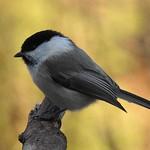
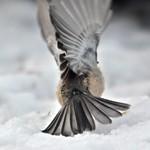
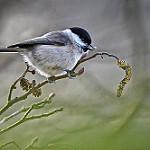
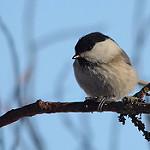

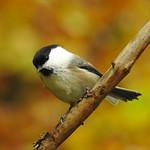
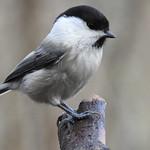
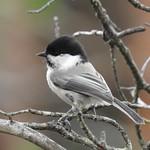
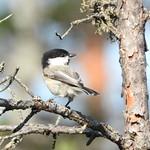
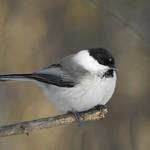
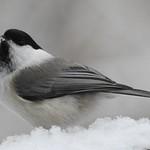
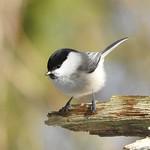
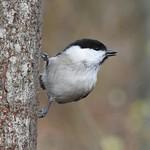
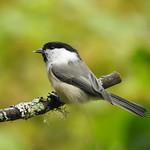
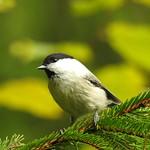
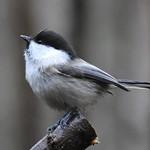
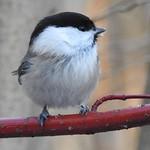
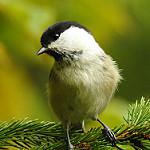
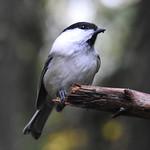
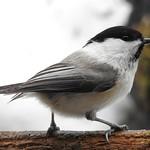
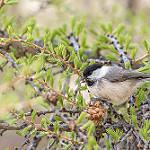
The Willow Tit (Poecile montanus) is a small passerine bird from the tit family, widely distributed across northern Eurasia. Its characteristic brownish cap, soft calls, and preference for damp woodlands make it a distinctive and easily recognizable species.
Species overview
- Scientific name: Poecile montanus
- Length: 11–13 cm
- Weight: 9–14 g
- Lifespan: 3–5 years (sometimes longer)
- Habitat: coniferous and mixed forests, river valleys, damp woodlands
Identification and key features
Though frequently confused with the Marsh Tit (Poecile palustris), the Willow Tit has several clear distinguishing traits:
Main field marks
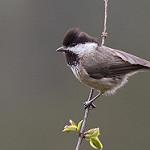
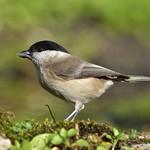
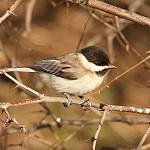
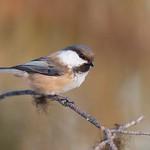
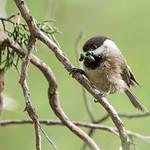
- Matte brown cap without gloss
- Pale cheeks and sides of the head
- Small black bib compared to the Marsh Tit’s larger bib
- Grey-brown upperparts
- Short bill and compact body shape
Distribution and habitat
The Willow Tit inhabits boreal and temperate forests across northern Eurasia, from Scandinavia and the Baltic region to Siberia and the Russian Far East. It favors damp woodland, spruce and pine forests, old river valleys, and areas rich in natural cavities.
Diet and feeding behavior
What does the Willow Tit eat?
- insects and larvae
- spiders and small invertebrates
- seeds of coniferous and deciduous trees
- berries
In summer the diet consists mainly of animal prey, while in winter seeds dominate. The species is known for caching food in bark crevices and moss, remembering numerous storage locations.
Vocalizations
The Willow Tit has soft, gentle calls often described as “pi-di-di” or “tsoo-tsoo.” Audio recordings of its songs and calls are available for listening directly on this page.
Breeding and nesting
Breeding characteristics
- Nests in natural cavities and rotting tree trunks
- Builds nests using moss, fur, feathers and plant fibers
- Lays 5–9 eggs per clutch
- Incubation lasts 12–14 days
Similar species
Commonly confused with:
- Marsh Tit (Poecile palustris)
- Crested Tit (Lophophanes cristatus)
- Blue Tit (Cyanistes caeruleus)
Interesting facts
- Can remember hundreds of food cache locations
- One of the most sedentary tit species with very limited movements
- Readily accepts nest boxes and feeders in gardens
FAQ — frequently asked questions
How do I tell a Willow Tit from a Marsh Tit?
Willow Tits have a matte brown cap, a smaller bib, and a harsh nasal call. Marsh Tits show a glossier black cap, a larger bib, and a clearer sharp “pitchoo” call.
Where can I most likely see Poecile montanus?
The species prefers moist coniferous and mixed forests, river valleys, old woodlands and areas rich in rotten stumps with natural cavities.
What does the Willow Tit eat during winter?
Winter diet consists mostly of seeds, berries and cached food stored earlier in the season.
Can I attract this species to my garden?
Yes. Willow Tits visit feeders with sunflower seeds and readily use small nest boxes with narrow entrance holes.
- Synonyms Willow or Songar Tit [excl. weigoldicus]
- Old latin name for bird Parus montanus
Willow Titbird sounds *
Related species



Where to see Willow Tit
- Breeding region Eurasia
- Breeding subregion widespread
- Albania
- Austria
- Belarus
- Belgium
- Bosnia and Herzegovina
- Bulgaria
- China
- Croatia
- Czechia
- Denmark
- Estonia
- Finland
- France
- Georgia
- Germany
- Greece
- Guernsey
- Hungary
- Italy
- Japan
- Kazakhstan
- Kyrgyzstan
- Latvia
- Liechtenstein
- Lithuania
- Luxembourg
- Moldova
- Monaco
- Mongolia
- Montenegro
- Netherlands
- North Korea
- North Macedonia
- Norway
- Poland
- Romania
- Russia
- San Marino
- Serbia
- Slovakia
- Slovenia
- South Korea
- Sweden
- Switzerland
- Ukraine
- United Kingdom
- Uzbekistan
- Åland Islands
Willow Tit subspecies (14)
| Subspecies | Breeding subregion | Nonbreeding subregion | Extinct |
|---|---|---|---|
| Poecile montanus affinis | nc China | - | No |
| Poecile montanus anadyrensis | ne Siberia | - | No |
| Poecile montanus baicalensis | ec, e Siberia, n Mongolia, n China and n Korea | - | No |
| Poecile montanus borealis | Scandinavia s to Ukraine | - | No |
| Poecile montanus kamtschatkensis | Kamchatka Pen. and n Kuril Is. | - | No |
| Poecile montanus kleinschmidti | Britain | - | No |
| Poecile montanus montanus | se France to Romania, Bulgaria and Greece | - | No |
| Poecile montanus restrictus | Japan | - | No |
| Poecile montanus rhenanus | nw France to w Germany, n Switzerland and n Italy | - | No |
| Poecile montanus sachalinensis | Sakhalin I. and s Kuril Is. | - | No |
| Poecile montanus salicarius | Germany and w Poland to ne Switzerland and Austria | - | No |
| Poecile montanus songarus | se Kazakhstan to Kyrgyzstan and nw China | - | No |
| Poecile montanus stoetzneri | ne China | - | No |
| Poecile montanus uralensis | se European Russia, w Siberia and Kazakhstan | - | No |
Species Name in Other Languages
| Language | Translation |
|---|---|
| Afrikaans | Wilgermees |
| Albanian | Trishtili kokëzi, Trishtili i maleve (shelgut) |
| Basque | Ipar-kaskabeltz |
| Belarusian | Бурагаловая сiнiца, Бурагаловая сініца |
| Breton | Pennduig-haleg |
| Bulgarian | Матовоглав синигер |
| Catalan | mallerenga capnegra |
| Chinese | 褐头山雀 |
| Chinese (Traditional) | 褐頭山雀 |
| Cornish | Penglow helyk |
| Croatian | planinska sjenica |
| Czech | sýkora lužní |
| Danish | Fyrremejse |
| Dutch | Matkop |
| Esperanto | salikparuo |
| Estonian | põhjatihane |
| Faroese | Skógtita |
| Finnish | hömötiainen |
| French | Mésange boréale, Mésange boréale ou M. de Dzoungarie [excl. weigoldicus] |
| Frisian | Reidmies |
| Galician | Ferreiriño sibilino |
| Georgian | მთის წივწივა |
| German | Weidenmeise |
| Greek | Βoυvoπαπαδίτσα, Βουνοπαπαδίτσα |
| Hebrew | ירגז-י הרים, ירגזי הרים |
| Hungarian | kormosfejű cinege |
| Icelandic | Votmeisa |
| Irish | Meantán léana |
| Italian | Cincia alpestre |
| Japanese | コガラ |
| Kazakh | Күрењбас шєже |
| Korean | 북방 쇠박새, 북방쇠박새 |
| Latvian | pelēkā zīlīte |
| Lithuanian | šiaurinė pilkoji zylė |
| Luxembourgish | Weidemees |
| Macedonian | планинска сипка, Планинска (Врбова) сипка |
| Manx | Drean shellee, Myntan shellee |
| Mongolian | Хүрэн толгойт хөх бух |
| Northern Sami | Vuovdegaccet, Guossagaccet |
| Norwegian | granmeis |
| Norwegian Nynorsk | Granmeis |
| Polish | czarnogłówka, czarnogłówka (zwyczajna), czarnoglówka |
| Portuguese | chapim-montês |
| Romanian | Pițigoi de munte, Piţigoi de munte |
| Romansh | Maset da muntogna |
| Russian | Пухляк, Буроголовая гаичка (пухляк) |
| Serbian | planinska siva sjenica, Planinska siva senica |
| Slovak | sýkorka čiernohlavá |
| Slovenian | gorska sinica |
| Spanish | Carbonero montano |
| Swedish | talltita |
| Turkish | Dağ Baştankarası |
| Ukrainian | гаїчка-пухляк звичайна, Гаїчка-пухляк |
| Welsh | Titw'r helyg |