New DiBird mobile app is now available — iOS & Android
Better on the app — your life list in your pocket. Download DiBird free
Long-tailed Tit / Aegithalos caudatus LC
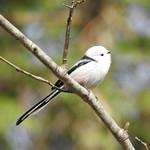
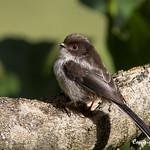
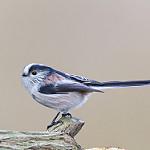
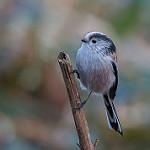
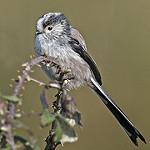
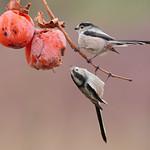
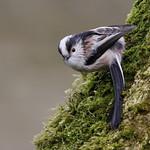
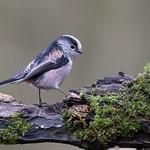
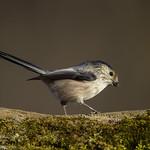
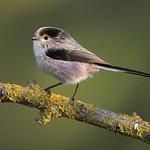
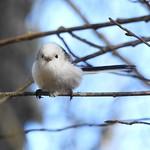
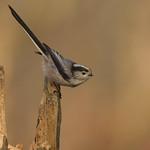
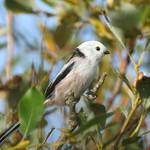
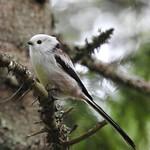
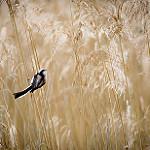
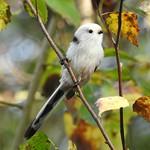
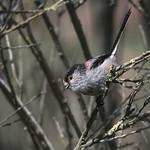
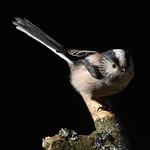
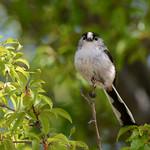
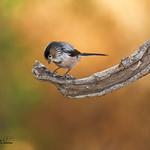
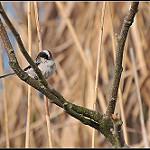
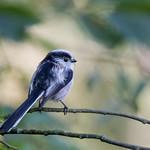
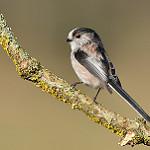
The Long-tailed Tit is a small, fluffy songbird from the family Aegithalidae. Known for its rounded body and unusually long tail, this bird is one of the most adorable woodland species in Europe and Asia. Often seen in lively flocks, the Long-tailed Tit constantly calls with soft twittering notes while flitting through the branches in search of food.
Description and identification
The Long-tailed Tit is about 13–15 cm long, with nearly half of that length taken up by its tail. It weighs only 7–10 g. You can easily recognize it by:
- A white or pinkish-white head with a dark stripe on each side.
- A round, fluffy body and a long tail that helps with balance during flight.
- Soft, silky plumage with a mix of white, gray, black, and pink tones.
Habitat and distribution
The Long-tailed Tit inhabits a wide range across Europe, Russia, the Caucasus, Siberia, and East Asia. It prefers:
- Deciduous and mixed forests with dense undergrowth;
- Parks and gardens near human settlements;
- Bushy edges of woods, ravines, and thickets.
Diet
The Long-tailed Tit primarily feeds on insects and other small invertebrates. Its diet includes:
- Tiny insects and their larvae;
- Spiders and aphids;
- Seeds and berries during the cold season.
Breeding and behavior
Breeding begins early in spring. Both partners build a beautiful domed nest made of moss, feathers, and lichens — one of the most intricate nests among small birds. The nest is hidden in bushes or trees. A typical clutch contains 8–12 eggs, incubated by the female for about two weeks.
Interesting facts about the Long-tailed Tit
- Despite its name, the Long-tailed Tit is not a true tit (family Paridae).
- These birds form family flocks of up to 20 individuals in winter, helping each other find food and stay warm.
- Their song is a series of gentle chirps and short trills, often heard in the treetops.
Conservation status
The Long-tailed Tit is classified as Least Concern (LC) on the IUCN Red List. Its population is stable across its range, although local threats include habitat loss due to forest clearance and reduced shrub cover.
Frequently Asked Questions (FAQ)
Where does the Long-tailed Tit live?
The Long-tailed Tit lives in woodlands, parks, and gardens across Europe and Asia, favoring areas with dense vegetation.
What does the Long-tailed Tit eat?
Its diet consists mainly of insects, spiders, and in winter — small seeds and berries.
How can you recognize a Long-tailed Tit?
It’s recognizable by its fluffy round body, white head, and very long tail — longer than the bird’s body itself.
Does the Long-tailed Tit migrate?
Most populations are resident and do not migrate, although they move locally in small flocks during winter in search of food.
- Synonyms Long-tailed Bushtit, Northern Long-tailed Tit
- Old latin name for bird Pipra europaea, Parus caudatus
Long-tailed Titbird sounds *
Related species
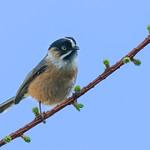
Where to see Long-tailed Tit
- Breeding region Eurasia
- Breeding subregion widespread
- Albania
- Andorra
- Armenia
- Austria
- Azerbaijan
- Belarus
- Belgium
- Bosnia and Herzegovina
- Bulgaria
- China
- Croatia
- Czechia
- Denmark
- Estonia
- Finland
- France
- Georgia
- Germany
- Gibraltar
- Greece
- Guernsey
- Holy See
- Hungary
- Iran
- Iraq
- Ireland
- Isle of Man
- Italy
- Japan
- Jersey
- Kazakhstan
- Kyrgyzstan
- Latvia
- Liechtenstein
- Lithuania
- Luxembourg
- Moldova
- Monaco
- Mongolia
- Montenegro
- Morocco
- Netherlands
- North Korea
- North Macedonia
- Norway
- Poland
- Portugal
- Romania
- Russia
- San Marino
- Serbia
- Slovakia
- Slovenia
- South Korea
- Spain
- Sweden
- Switzerland
- Syria
- Tunisia
- Turkey
- Turkmenistan
- Ukraine
- United Kingdom
- Uzbekistan
- Åland Islands
Long-tailed Tit subspecies (17)
| Subspecies | Breeding subregion | Nonbreeding subregion | Extinct |
|---|---|---|---|
| Aegithalos caudatus alpinus | se Azerbaijan, n Iran and sw Turkmenistan | - | No |
| Aegithalos caudatus aremoricus | w France | - | No |
| Aegithalos caudatus caudatus | n, e Europe to e Siberia, Japan and Korean Pen. | - | No |
| Aegithalos caudatus europaeus | ne France, Germany and s Denmark to n Italy (Alps), w Poland and w Romania | - | No |
| Aegithalos caudatus irbii | s Spain and Portugal, Corsica | - | No |
| Aegithalos caudatus italiae | Italy (s of the Alps), sw Slovenia | - | No |
| Aegithalos caudatus kiusiuensis | s Japan | - | No |
| Aegithalos caudatus macedonicus | Albania and mainland Greece to the Balkans, Bulgaria and nw Turkey | - | No |
| Aegithalos caudatus magnus | c, s Korean Pen., Tsushima (Japan) | - | No |
| Aegithalos caudatus major | ne Turkey and the Caucasus | - | No |
| Aegithalos caudatus passekii | se Turkey and sw Iran | - | No |
| Aegithalos caudatus rosaceus | British Isles | - | No |
| Aegithalos caudatus siculus | Sicily | - | No |
| Aegithalos caudatus taiti | sw, s France to c Spain and Portugal | - | No |
| Aegithalos caudatus tauricus | Crimean Pen. | - | No |
| Aegithalos caudatus tephronotus | e Greece to c Turkey, n Iraq and Syria | - | No |
| Aegithalos caudatus trivirgatus | c Japan | - | No |
Species Name in Other Languages
| Language | Translation |
|---|---|
| Abkhazian | аШшаӷьыч үиуүиу, аҮиуүиу, аШшаӷьыч Үыхәаду |
| Afrikaans | Langstertmees |
| Albanian | Trishtili bishtgjatë |
| Arabic | عصفور طويل الذيل |
| Armenian | Երկարագի երաշտահավ, Երկարագի Երաժտահավ |
| Azerbaijani | Uzunquyruq arıquşu, arıquşu uzunquуruq |
| Bashkir | уҡҡойроҡ, мамыҡас, мамыҡ турғай |
| Basque | Buztanluze, Buztanluzea |
| Belarusian | Сініца-апалоўник, Ciнiца-апалоўнiк, Сініца-апалоўнік, Сiнiца-апалоўнiк |
| Breton | Ar binoter lostek, Binoter lostek |
| Bulgarian | Дългоопашат синигер |
| Catalan | Mallerenga cuallarga, mallerenga cuallarga eurasiàtica |
| Chinese | 北长尾山雀, 银喉山雀, 银喉长尾山雀, 吱吱猴, 銀喉長尾山雀 |
| Chinese (Traditional) | 長尾山雀, 吱吱猴, 銀喉長尾山雀, 銀喉山雀 |
| Chuvash | вăрăм хӳреллĕ кăсăя |
| Cornish | Lostek |
| Croatian | dugorepa sjenica |
| Czech | mlynařík dlouhoocasý, Mlynarík dlouhoocasý |
| Danish | Nordlig Halemejse, Halemejse |
| Dutch | Staartmees |
| Esperanto | Egitalo, longvosta paruo |
| Estonian | sabatihane |
| Faroese | veltíta, Veltita |
| Finnish | pyrstötiainen |
| French | Mésange à longue queue, Orite à longue queue |
| Frisian | Langsturtmies |
| Galician | Ferreiriño rabilongo, Subeliña común |
| Georgian | თოხიტარა |
| German | Schwanzmeise |
| Greek | Αιγίθαλος, Αιγίθαλoς |
| Hebrew | ירגזי זנבתן, ירגז-י זנבתן |
| Hungarian | Oszapó, őszapó |
| Icelandic | Skottmeisa |
| Irish | Meantán Earrfhada, Meantán fadearrach |
| Italian | Codibugnolo |
| Japanese | エナガ |
| Kazakh | ұзын құйрықты көкшымшық, Кезқұйрық шымшық |
| Korean | 오목눈이 |
| Latvian | garastīte |
| Lithuanian | Ilgauodegė zylė, šiaurinė ilgauodegė zylė, Ilgauodege zyle, Siaurinė ilgauodegė zylė |
| Luxembourgish | Schwanzmees |
| Macedonian | дологоопашеста сипка, Долгоопашеста сипка |
| Manx | Caillagh Veg yn Arbyl, Myntan arbyl-liauyr |
| Mongolian | сүүлт хөхбух, Сүүлт хөх бух, урт сүүлт хөх бухандай, Сүүлт хөхбухандай, мөнгөн хоолойт онхол задуулай |
| Northern Sami | Baðošgaccet, Bađošgaccet |
| Norwegian | stjertmeis |
| Norwegian Nynorsk | Stjertmeis |
| Persian | چرخریسک دُمدراز, چرخریسک دمدراز, چرخریسک دم دراز |
| Polish | raniuszek, raniuszek zwyczajny, raniuszek (zwyczajny) |
| Portuguese | chapim-rabilongo |
| Romanian | Piţigoi codat, Pițigoi codat |
| Romansh | Sbrinzlina |
| Russian | Длиннохвостая синица, Синица длиннохвостая, Длиннохвостая синица (ополовник), Ополовник |
| Serbian | Dugorepa senica, dugorepa sjenica |
| Slovak | mlynárka dlhochvostá |
| Slovenian | dolgorepka |
| Spanish | Mito, Mito común, Satrecito de Cola Larga |
| Swedish | stjärtmes |
| Tajik | чархресаки думдароз |
| Tatar | озын койрыклы песнәк |
| Turkish | Uzunkuyruklu baştankara, Кезқұйрық шымшық, Bayağı uzunkuyruk, Uzun Kuyruklu Baştankara |
| Turkmen | uzynguýruk gögümtil jikjiki |
| Ukrainian | Довгохвоста синиця, або синиця довгохвоста, ополовник звичайний, Синиця довгохвоста |
| Uzbek | узун думли читтак, думли парранда |
| Welsh | Titw cynffon-hir, Titw Gynffon-hir |