New DiBird mobile app is now available — iOS & Android
Better on the app — your life list in your pocket. Download DiBird free
European Robin (Erithacus rubecula) — Identification, Song, and Facts LC
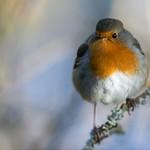
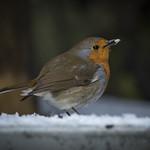
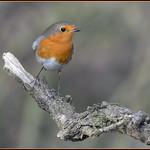
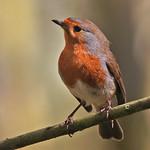
Overview
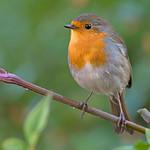
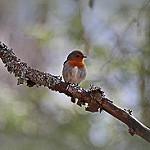
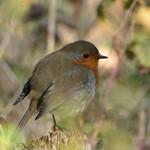
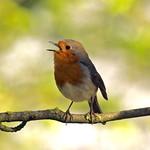
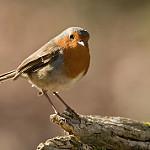
The European Robin (Erithacus rubecula) is one of the most beloved and recognizable songbirds across Europe. Known for its bright orange-red breast and melodious song, this small bird often symbolizes winter and Christmas. Despite its delicate appearance, the robin is a territorial and resilient species that thrives close to humans.
Habitat and Distribution
Robins are widespread throughout Europe, western Asia, and parts of North Africa. They prefer moist deciduous and mixed forests, gardens, hedgerows, and parks. Many robins are resident birds, while those from northern regions migrate south during colder months.
Migration Patterns
In northern Europe, robins migrate to milder regions such as southern France, Spain, or North Africa. Meanwhile, robins in western and southern Europe often stay year-round. Their ability to adapt to human environments helps maintain stable populations even in urban areas.
Appearance and Identification
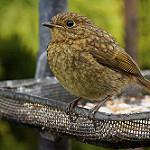
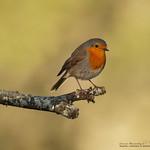
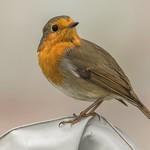
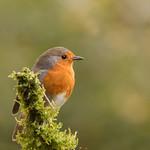
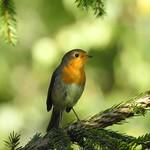
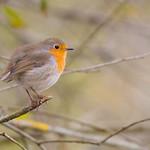
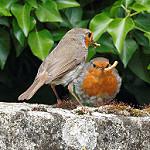
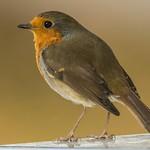
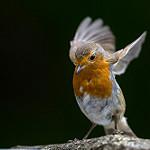
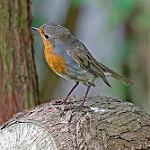
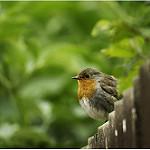
The robin measures around 13–15 cm in length with a wingspan up to 20 cm and a weight of 15–20 grams. Adults have an orange-red face and breast, olive-brown upperparts, and whitish underparts. Males and females look alike. Juveniles are brown with speckles and lack the distinctive red breast until they molt.
Robin Song and Calls
The robin’s song is a soft, melodic warble that sounds both cheerful and wistful. Males sing year-round to defend their territory — even in winter when few other birds vocalize. Listen to authentic recordings on this page.
Diet and Feeding
Robins are omnivorous. In summer, they eat insects, worms, and spiders. In winter, they switch to berries, fruits, and seeds. They are often seen following gardeners, snatching up disturbed insects and worms — a behavior that has made them famous companions in European folklore.
Breeding and Nesting
Robins breed from April to July. The female builds a nest low to the ground, often in roots, cavities, or garden sheds. She lays 5–7 eggs and incubates them for about 13–14 days. The chicks fledge after two weeks but may remain nearby for several more days while learning to feed.
Interesting Facts about Robins
- The European robin is the national bird of the United Kingdom.
- Robins are often featured on Christmas cards and decorations, symbolizing warmth and renewal.
- Males are extremely territorial and will fiercely defend their nesting area from intruders — even their reflection in mirrors or windows.
- Unlike many songbirds, robins sing throughout winter to establish feeding territories.
Conservation Status
According to the IUCN Red List, the European robin is listed as Least Concern (LC). Its population is stable and expanding thanks to adaptability and widespread habitat availability across Europe.
FAQ — European Robin
Where do European robins live?
European robins inhabit woodlands, gardens, and parks throughout Europe, western Asia, and parts of North Africa. They adapt well to human settlements.
What do robins eat in winter?
In winter, robins feed mainly on berries, seeds, and small fruits, occasionally supplemented by insects or mealworms provided by humans.
How to attract robins to your garden?
To attract robins, place feeders with mealworms, soft fruits, or crushed nuts, and keep dense shrubs or hedges for nesting and shelter.
Do male and female robins look different?
No, males and females have nearly identical plumage. Both feature the signature orange breast, though males may sing more frequently.
- Synonyms Robin, European or Tenerife Robin, Eurasian Robin
- Old latin name for bird Motacilla rubecula
European Robinbird sounds *
Where to see European Robin
- Breeding region Eurasia
- Breeding subregion w, c
- Non breeding region to n AF
- Afghanistan
- Albania
- Algeria
- Andorra
- Armenia
- Austria
- Azerbaijan
- Bahrain
- Belarus
- Belgium
- Bosnia and Herzegovina
- Bulgaria
- Cabo Verde
- Canada
- China
- Croatia
- Cyprus
- Czechia
- Denmark
- Egypt
- Estonia
- Faroe Islands
- Finland
- France
- Georgia
- Germany
- Gibraltar
- Greece
- Guernsey
- Holy See
- Hungary
- Iceland
- Iran
- Iraq
- Ireland
- Isle of Man
- Israel
- Italy
- Japan
- Jersey
- Jordan
- Kazakhstan
- Kuwait
- Kyrgyzstan
- Latvia
- Lebanon
- Libya
- Liechtenstein
- Lithuania
- Luxembourg
- Malta
- Mauritania
- Moldova
- Monaco
- Mongolia
- Montenegro
- Morocco
- Netherlands
- North Macedonia
- Norway
- Oman
- Pakistan
- Palestine, State of
- Poland
- Portugal
- Qatar
- Romania
- Russia
- Saint Helena, Ascension and Tristan da Cunha
- San Marino
- Saudi Arabia
- Serbia
- Slovakia
- Slovenia
- South Korea
- Spain
- Svalbard and Jan Mayen
- Sweden
- Switzerland
- Syria
- Tajikistan
- Tunisia
- Turkey
- Turkmenistan
- Ukraine
- United Arab Emirates
- United Kingdom
- United States of America
- Uzbekistan
- Western Sahara
- Yemen
- Åland Islands
European Robin subspecies (9)
| Subspecies | Breeding subregion | Nonbreeding subregion | Extinct |
|---|---|---|---|
| Erithacus rubecula caucasicus | e Turkey and the Caucasus | - | No |
| Erithacus rubecula hyrcanus | se Azerbaijan and n Iran | - | No |
| Erithacus rubecula marionae | Gran Canaria (c Canary Is., c Macaronesia, nw of n Africa) | - | No |
| Erithacus rubecula melophilus | British Isles | - | No |
| Erithacus rubecula rubecula | Azores, Madeira and w Canary Is. (n to c Macaronesia, nw of n Africa), continental Europe to Ural Mts., w Turkey and nw Morocco | - | No |
| Erithacus rubecula superbus | Tenerife (c Canary Is., c Macaronesia, nw of n Africa) | - | No |
| Erithacus rubecula tataricus | Ural Mts. and sw Siberia | - | No |
| Erithacus rubecula valens | s Crimean Pen. (s Ukraine) | - | No |
| Erithacus rubecula witherbyi | n Algeria and n Tunisia | - | No |
Species Name in Other Languages
| Language | Translation |
|---|---|
| Afrikaans | Rooiborsie |
| Albanian | gushëkuqi |
| Arabic | أبو الحناء, أبو الحناء الأوروبي, أبو الحنّاء, أم الحنا |
| Armenian | Արշալուսիկ, Արժալուսիկ, Առշալուսիկ, [Arshalusik ] |
| Azerbaijani | Şəfəq bülbülü |
| Basque | Txantxangorria, Txantxangorri, Txantxan, Pit-roig |
| Belarusian | Заранка, Малінаўка, Малiнаўка |
| Breton | Richodell, Torig-ruz, Kofig-ruz, Pichig-ruz, Rujodenn, Pêrig kof-ruz, Boc'hruzig, Draouennig-vras, Buruig, Bruched-ruz, Brennid-ruz, Boc'hruzig rujodenn, Ar boc'hruzig rujodenn |
| Bulgarian | Червеногушка, Червеногръдка |
| Catalan | pit-roig, Rupit |
| Chinese | [Ou-ya qu], 欧亚鸲, 欧亚歌鸲 |
| Chinese (Traditional) | 歐亞鴝, 歐亞歌鴝 |
| Cornish | Rudhek, Rudhak |
| Croatian | Crvendac, crvendać, Čučka crvendać |
| Czech | červenka obecná, Cervenka obecná |
| Danish | Rødhals |
| Dutch | Roodborst |
| Esperanto | Ruĝgorĝulo, Rubekolo |
| Estonian | punarind |
| Faroese | BringureyðI, Reyðbrystingur |
| Finnish | punarinta |
| French | Rougegorge, Le rouge-gorge, Rougegorge familier ou R. de Ténériffe, Rougegorge familier |
| Frisian | Readboarstke |
| Galician | Paporrubio común, Paporrubio, Pit-roig |
| Georgian | ბულწითელა, გულწითელა |
| German | Rotkehlchen |
| Greek | [Kοkkinοlaimis], Κoκκιvoλαίμης, Κοκκινολαίμης |
| Hebrew | אדום־חזה, אדום חזה, אדום החזה, אדום-חזה |
| Hungarian | vörösbegy |
| Icelandic | Glóbrystingur |
| Irish | Spideóg, Spideog |
| Italian | Pettirosso, Pettirosso europeo |
| Japanese | ヨアロッパコマドリ, ヨーロッパコマドリ |
| Kazakh | Тањшымшық |
| Korean | 꼬까울새 |
| Latvian | Sarkankrūtītis, sarkanrīklīte |
| Lithuanian | Liepsnelė, paprastoji liepsnelė, Liepsnele |
| Luxembourgish | Routbrëschtchen |
| Macedonian | црвеногушка, Црвеногушка |
| Maltese | Pitirross, Pitirros |
| Manx | Spittag, Spiitag, Cleean Jiarg |
| Mongolian | Өрнийн зээрд омруут, Өрнийн зээрдомруу |
| Northern Sami | Guovssoloddi |
| Norwegian | Rødkjelke, rødstrupe, Rødkjelk |
| Norwegian Nynorsk | Raudstrupe |
| Persian | سینه سرخ اروپایی, سینهسرخ اروپایی, سینهسرخ |
| Polish | rudzik (zwyczajny), Rudzik zwyczajny, rudzik |
| Portuguese | pisco de peito riuvo, Pisco-de-peito-riuvo, pisco-de-peito-ruivo |
| Romanian | Măcăleandru, Guşă-roşie |
| Romansh | Puppencotschen, puppen cotschen |
| Russian | Зарянка обыкновенная, Обыкновенная зарянка, Зарянка, Зарянка - Малиновка |
| Sardinian | Scraxarrůbiu, Ghiru, Brabarrůbia, Iscalziruggiu, Pitturrarrůbiu, Brinci, Barbarrubia |
| Serbian | Crvendać, Црвендаћ, crvendac |
| Slovak | slávik červienka (červienka obyčajná), červienka obyčajná, slávik červienka |
| Slovenian | tašcica, taščica |
| Spanish | Petirro, Petirrojo, Petirrojo europeo |
| Swedish | rödhake |
| Turkish | kyzylgerdan, Таңшымшық, Nar Bülbülü, Kızılgerdan |
| Turkmen | kızıgerdan |
| Ukrainian | Малинівка, вільшанка |
| Welsh | Bronruddyn, Bronrhuddyn, Brongoch, Coch-gam, Robin goch |