New DiBird mobile app is now available — iOS & Android
Better on the app — your life list in your pocket. Download DiBird free
Eurasian Jay (Garrulus glandarius) — identification, calls, behaviour and photos LC
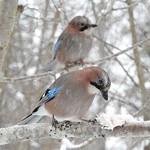
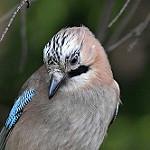
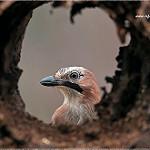
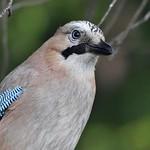
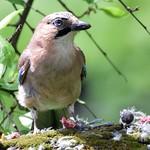
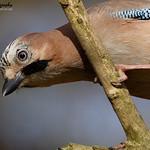
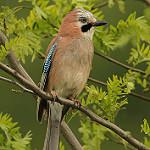
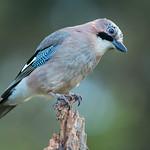
Quick species overview
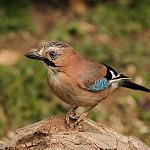
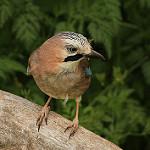
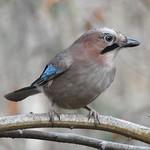
The Eurasian Jay (Garrulus glandarius) is a medium-sized corvid known for its warm pink-brown body, striking blue and black barred patches on the wings, and a loud, rasping call. Often seen at forest edges and large parks, the jay is both secretive and conspicuously bold — intelligent, adaptable and a key agent in oak regeneration because of its habit of burying acorns.
Distribution and preferred habitats
Jays are widely distributed across most of Europe, parts of north Africa and across temperate Asia. They favour mixed and deciduous woodlands — especially oak and beech forests — but are also common in large urban parks, orchards and hedgerows.
Typical habitat types
- mature oak and mixed deciduous forests
- forest edges, clearings and riverine woodlands
- urban parks, large gardens and cemeteries
- woodland rides and hedgerows
Identification — size, plumage and key features
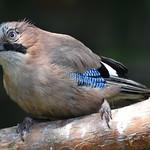
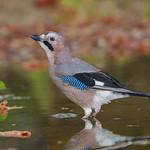
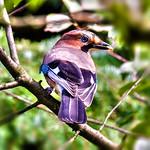
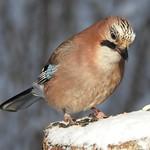
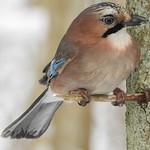
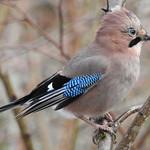
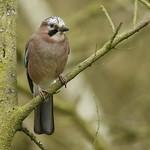
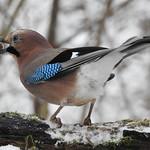
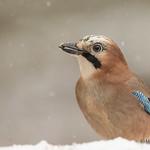
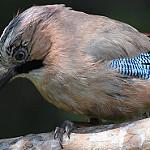
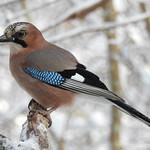
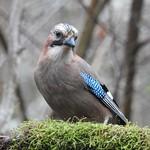
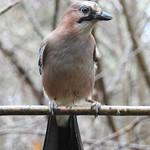
Length ~34 cm, wingspan 52–58 cm, weight 140–190 g. Overall warm pinkish-brown with a black moustachial stripe and pale crown streaking. Most diagnostic: the electric blue scapular patch with distinct black barring and white shoulder patch visible in flight. Tail and wing tips are darker; underparts paler.
Sex, age differences and moult
Sexes are similar in appearance; juveniles show duller plumage and less distinct blue wing patch. Molt usually occurs after the breeding season and can affect how fresh the blue feathers look.
Diet and foraging ecology
Eurasian Jays are opportunistic omnivores. Their diet shifts seasonally and includes a wide range of animal and plant foods.
- insects and invertebrates: beetles, caterpillars, spiders
- acorns, nuts, seeds and fallen fruits
- small vertebrates, eggs and nestlings (occasionally)
- human food scraps in urban areas
Vocalisations, mimicry and behaviour
The jay’s call is a loud, harsh „kraak” or rasping screech used as an alarm and contact call. It also produces softer chattering, whisper calls and long, rolling rattles. Jays are excellent mimics and may imitate raptors or other woodland sounds — a behaviour that can confuse predators or competitors.
Sounds and calls can be listened on this page.
Caching behaviour and ecological role
One of the jay’s most important ecological roles is acorn caching. Jays bury thousands of acorns each autumn, and their excellent spatial memory and scatter-hoarding behaviour make them major contributors to natural oak regeneration. Not all cached acorns are recovered — many germinate, helping shape woodland composition.
- scatter-hoarding: thousands of caches per season
- excellent spatial memory for retrieval
- contributes to seed dispersal and forest dynamics
Breeding and nesting
Breeding usually begins in spring. Pairs build a bulky cup nest of twigs, rootlets and moss placed in dense foliage 2–10 m above ground. Typical clutch size is 4–6 eggs; incubation lasts around 16–18 days and chicks fledge after approximately 3–4 weeks. Jays are territorial during nesting and will give loud alarm calls to defend young.
Breeding behaviour highlights
- territorial displays and loud alarm calls
- both parents feed nestlings intensively
- may re-nest if the first nest fails
Intelligence and social behaviour
As corvids, jays show advanced cognitive abilities: problem solving, planning, deception (fake caching), and observational learning. They use their memory and social information to locate food and avoid kleptoparasitism. In humanized landscapes they can become habituated and bold around people who feed them.
How to tell a jay apart from similar species
- blue and black barred wing patch unique among regional corvids
- warm pinkish-brown body (not the glossy black of crows or the long tail of magpies)
- distinctive harsh, rasping alarm call
Practical birdwatching tips
- Search oak woodland edges and mature parks in autumn for active acorn foraging.
- Listen for loud rasping alarm calls early morning and late afternoon.
- Bring binoculars (8–10×) and scan tree crowns for the blue wing patch in flight.
- Avoid disturbing nests during the breeding season; observe quietly from a distance.
Frequently asked questions (FAQ)
Where do Eurasian jays live?
Eurasian jays occupy mixed and deciduous woodlands across Europe and temperate Asia, and are also common in large parks and mature gardens with oak trees.
What do jays eat and why do they store acorns?
Jays eat insects, seeds, nuts, fruits and occasionally small vertebrates or eggs. They cache acorns and nuts to secure food for winter; many forgotten caches later germinate, aiding woodland regeneration.
Are jays aggressive to other birds?
Jays can be territorial and noisy, especially near nests. They may harass smaller birds, take eggs or nestlings opportunistically, and aggressively defend food caches from competitors.
How can I attract jays to my garden?
Plant native oaks where possible, leave leaf litter, provide nutty foods and unsalted peanuts in feeders, and maintain mature trees — but avoid feeding during the breeding season close to nests to prevent disturbance.
Do jays mimic other birds?
Yes — jays can mimic raptors and other bird calls. Mimicry can function to deter competitors or predators and is part of their broad vocal repertoire.
- Synonyms Black-throated jay, Common Jay, European Jay, Acorn Jay, Jay, White-eared Jay, Red-crowned Jay
- Old latin name for bird Corvus glandarius
Eurasian Jaybird sounds *
Related species
Where to see Eurasian Jay
- Breeding region Eurasia, Oriental Region
- Breeding subregion widespread, also nw Africa
- Albania
- Algeria
- Andorra
- Armenia
- Austria
- Azerbaijan
- Bangladesh
- Belarus
- Belgium
- Bhutan
- Bosnia and Herzegovina
- Bulgaria
- Cambodia
- China
- Croatia
- Cyprus
- Czechia
- Denmark
- Estonia
- Finland
- France
- Georgia
- Germany
- Gibraltar
- Greece
- Guernsey
- Holy See
- Hong Kong
- Hungary
- India
- Iran
- Iraq
- Ireland
- Isle of Man
- Israel
- Italy
- Japan
- Jersey
- Jordan
- Kazakhstan
- Laos
- Latvia
- Lebanon
- Liechtenstein
- Lithuania
- Luxembourg
- Macao
- Malta
- Moldova
- Monaco
- Mongolia
- Montenegro
- Morocco
- Myanmar
- Nepal
- Netherlands
- North Korea
- North Macedonia
- Norway
- Pakistan
- Palestine, State of
- Poland
- Portugal
- Romania
- Russia
- San Marino
- Serbia
- Slovakia
- Slovenia
- South Korea
- Spain
- Sweden
- Switzerland
- Syria
- Taiwan
- Thailand
- Tunisia
- Turkey
- Ukraine
- United Kingdom
- Vietnam
- Åland Islands
Eurasian Jay subspecies (34)
| Subspecies | Breeding subregion | Nonbreeding subregion | Extinct |
|---|---|---|---|
| Garrulus glandarius albipectus | Italy, Sicily and the Dalmatian coast | - | No |
| Garrulus glandarius anatoliae | w Turkey to w Iran and n Iraq | - | No |
| Garrulus glandarius atricapillus | w Syria, w Jordan and Israel | - | No |
| Garrulus glandarius bispecularis | w Himalayas to w Nepal | - | No |
| Garrulus glandarius brandtii | s Siberia, n Mongolia, nw, ne China, Korean Pen. and n Japan | - | No |
| Garrulus glandarius cervicalis | n, ne Algeria and Tunisia | - | No |
| Garrulus glandarius corsicanus | Corsica | - | No |
| Garrulus glandarius cretorum | Crete | - | No |
| Garrulus glandarius fasciatus | Iberian Pen. | - | No |
| Garrulus glandarius ferdinandi | e Bulgaria and n Turkey | - | No |
| Garrulus glandarius glandarius | n, c Europe to the Ural Mts. | - | No |
| Garrulus glandarius glaszneri | Cyprus | - | No |
| Garrulus glandarius graecus | w Balkans including Greece | - | No |
| Garrulus glandarius haringtoni | w Myanmar | - | No |
| Garrulus glandarius hibernicus | Ireland | - | No |
| Garrulus glandarius hyrcanus | se Azerbaijan and n Iran | - | No |
| Garrulus glandarius ichnusae | Sardinia | - | No |
| Garrulus glandarius interstinctus | e Himalayas | - | No |
| Garrulus glandarius iphigenia | Crimean Pen. (n coast of the Black Sea) | - | No |
| Garrulus glandarius japonicus | Honshu, Oshima and Kyushu (c, s Japan) | - | No |
| Garrulus glandarius kansuensis | c China | - | No |
| Garrulus glandarius krynicki | ne Turkey and the Caucasus | - | No |
| Garrulus glandarius leucotis | c Myanmar to c, s Indochina | - | No |
| Garrulus glandarius minor | c Morocco and the Atlas Mts. of n Algeria | - | No |
| Garrulus glandarius oatesi | nw Myanmar | - | No |
| Garrulus glandarius orii | Yakushima (Osumi Is., s Japan) | - | No |
| Garrulus glandarius pekingensis | e China | - | No |
| Garrulus glandarius persaturatus | ne India (s Assam) | - | No |
| Garrulus glandarius rufitergum | Scotland, England, Wales and nw France | - | No |
| Garrulus glandarius samios | Samos (se Aegean Sea) | - | No |
| Garrulus glandarius sinensis | n Myanmar and s, e China | - | No |
| Garrulus glandarius taivanus | Taiwan | - | No |
| Garrulus glandarius tokugawae | Sado I. (off Honshu, c Japan) | - | No |
| Garrulus glandarius whitakeri | n Morocco and nw Algeria | - | No |
Species Name in Other Languages
| Language | Translation |
|---|---|
| Abkhazian | аХыжь, аХЬьада, аХЬажь, аҞӘыра ӷра , аХЬыжь |
| Afrikaans | Eurasiatiese gaai |
| Albanian | grifsha |
| Arabic | أبو زُريق الأوراسي, القيق(أبو زريق) |
| Armenian | Չարդ/Անտառային Կաչաղակ, Անտառային Կաչաղակ, [Chard/Antarayin Kachaghak ] |
| Azerbaijani | adi zığ-zığ, alaqarğa, Zığ–zığ, zığ-zığ, Çəhrayı sığırçın, Zığzığ |
| Bashkir | урман сәүкәһе, суҡтурғай, бараба, урман һайыҫҡаны |
| Basque | Eskinosoa, Gaig, eskinoso |
| Belarusian | сойка, sojka, Cойка, Сойка |
| Breton | Kegin-derv, Richard, Ar gegin derv, kegin |
| Bulgarian | sojka, Сойка |
| Catalan | Gaig, gaig eurasiàtic, Estornell rosat |
| Chinese | [shan heshang], 松鸦, 松鴉, 山和尚, 㭴鸟, 塞皋, [saigao], 橿鸟, [wu-niao], 屋鸟, 松鴉(橿鳥) , [song-ya], [jiang-niao] |
| Chinese (Traditional) | 屋鳥, 山和尚, 橿鳥, 塞皋, 樫鳥, 松鴉 |
| Chuvash | сульха, кĕпшĕл |
| Cornish | kegin, Kegyn, Keyn |
| Croatian | Šojka kreštalica, šojka |
| Czech | sojka obecná, sojka, Sojka obecný |
| Danish | Skovskade |
| Dutch | Gaai, Vlaamse Gaai |
| Esperanto | Eŭropazia garolo, garolo, Eŭrazia garolo |
| Estonian | pasknäär |
| Faroese | gnelliskjóra |
| Finnish | närhi |
| French | Geai des chênes, Geai commune, Geai glandivore |
| Frisian | houtekster |
| Galician | Gaio, Gaig, Gaio común |
| Georgian | ჯაფარა, ჩხიკვი |
| German | Eichelhäher, Eichelhaher, Eichelhaeher |
| Greek | kissa, Κίσσα, (Ευρωπαϊκή) Κίσσα |
| Hebrew | עורבני שחור־כיפה, עורבני |
| Hungarian | szajkó |
| Icelandic | Skrækskaði |
| Irish | pega marza, Scréachóg choille, gaio, scréachóg |
| Italian | Ghiandaia, Ghiandaia eurasiatica |
| Japanese | カケス, カシドリ, ヤマガラス |
| Kazakh | Жорғаторғай, Қызғылт қараторғай, торғай |
| Korean | 어치 |
| Latvian | sīlis, silis, Krēķis |
| Lithuanian | Kekštas, eurazinis kėkštas, Rąšis, kėkštas |
| Luxembourgish | Maarkollef, Markollef |
| Macedonian | Сојка, соjка, sojka, сојка |
| Maltese | Sultan ic-Cawl, sultan iċ-ċawl |
| Manx | screeaghag cheylley, Screeaaghag Cheylley |
| Mongolian | ит, цахч, Цагчаа ятгашаазгай, цахч шаазгай, Ит хэрээ, Ятга шаазгай |
| Northern Sami | Látteguovssat |
| Norwegian | Granskjur, nøtteskrike |
| Norwegian Nynorsk | Nøtteskrikje |
| Occitan | gag |
| Persian | جیجاق, جیجاق (زاغ جنگلی) |
| Polish | Sójka pospolita, sójka (zwyczajna), sójka, Sójka zwyczajna |
| Portuguese | Gaio-comum, gaio-eurasiático, gaio, Gaio(-comum) |
| Romanian | Gaiţă, gaiţă, Gaiță, gaita |
| Romansh | sgragia |
| Russian | Soyka, Обыкновенная сойка, Cойка, Сойка, Сойка обыкновенная, sojka |
| Sardinian | malapiga, Marabiga, melapica, pica, piga, mariabiga |
| Serbian | Kreja, Sojka, kreja (sojka), šojka, креjа, Креја, шоjка |
| Slovak | sojka obyčajná, Šoja, sojka škriekavá |
| Slovenian | šoja |
| Spanish | Arredajo, Arrandejo Común, Arrendajo, Alcaudón enmascarado, Arrendajo Común, Arrendajo euroasiático, Arrrendajo, Arrandejo сomún |
| Swedish | nötskrika |
| Tajik | хӯл |
| Tatar | күкшә , имән каргасы, бараба, урман саесканы, гади күкканат , күкканат , гадәти күкканат |
| Thai | นกปีกลายสก๊อต, นกปีกลายสก็อต, นกปีกลายสก๊อท |
| Turkish | Жорғаторғай, Kestane Kargası, Alakarga |
| Turkmen | Al sar, alakarga |
| Ukrainian | сойка, sojka, сойка звичайна |
| Uzbek | сойка |
| Vietnamese | Chim Quạ thông, Quạ thông |
| Welsh | Pioden y coed, Ysgrech y coed, sgrech y coed, Piogen-y-coed, Piogen goch |