New DiBird mobile app is now available — iOS & Android
Better on the app — your life list in your pocket. Download DiBird free
Elf Owl (Micrathene whitneyi) — the smallest owl in the world LC
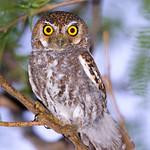
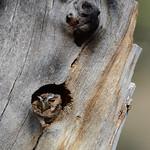
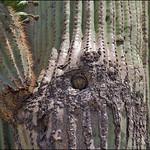
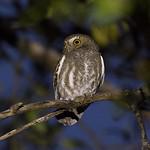
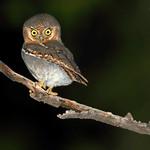
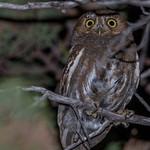
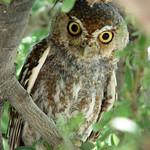
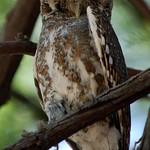
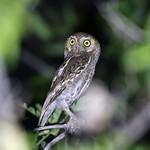
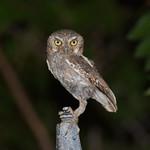
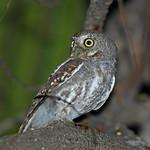
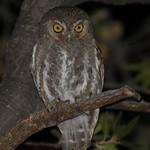
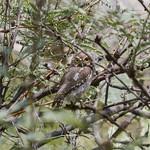
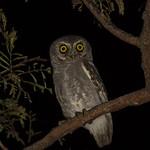
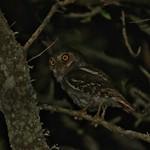
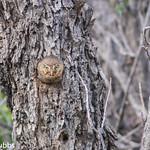
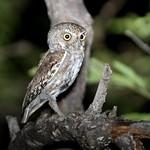
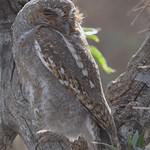
The Elf Owl (Micrathene whitneyi) is the world’s smallest owl. Native to the deserts of the southwestern United States and northern Mexico, this tiny nocturnal hunter embodies both charm and adaptability. Despite its size, it is a capable predator with keen hearing and silent flight.
Description and Appearance
The Elf Owl measures only 12–15 cm in length and weighs about 40 grams — less than a chicken egg. Both males and females have grayish-brown plumage with white spots that provide perfect camouflage among tree bark and cactus stems where the owl roosts during the day.
- Body length: 12–15 cm (4.7–6 in)
- Wingspan: up to 27 cm (10.5 in)
- Weight: around 40 g (1.4 oz)
- Average lifespan: 5–7 years in the wild
Habitat and Range
The Elf Owl inhabits deserts and semi-arid regions, especially areas with saguaro cacti or trees with old woodpecker holes for nesting. Its main range includes southern Arizona, New Mexico, Texas, and northern Mexico.
- Found in deserts, scrublands, and dry forests
- Roosts and nests in cavities made by woodpeckers
- Strictly nocturnal — active only after sunset
Diet and Hunting
Despite its tiny size, the Elf Owl is a fierce insect-eater. It hunts beetles, moths, grasshoppers, and sometimes small lizards or rodents. Using exceptional night vision and silent flight, it hunts swiftly and efficiently.
- Diet consists mainly of large insects
- Occasionally preys on small vertebrates
- Often stores food in cavities for later use
Breeding and Behavior
Breeding season occurs in spring. The female lays 2–3 eggs in a natural cavity or old woodpecker hole, often in a cactus. The male provides food while the female incubates the eggs for about 3 weeks. The chicks fledge at around one month old. Elf Owls are mostly sedentary, though northern populations may migrate short distances in winter.
- Breeds in tree and cactus cavities
- Female incubates, male delivers food
- Young leave the nest after about 4 weeks
Interesting Facts about Elf Owls
- Smallest owl species on Earth
- Weighs less than a standard chicken egg
- Produces a melodic “tu-tu-tu” call during the night
- Leads a solitary life except during breeding
Conservation and Population
The Elf Owl is not currently endangered, but habitat loss due to deforestation and cactus removal threatens local populations. In the U.S., it is protected in Arizona and New Mexico, where conservation efforts include habitat restoration and nest box programs.
Listen to the Elf Owl’s Call
On this page, you can listen to the voice of the Elf Owl (Micrathene whitneyi) directly — no external links needed.
Frequently Asked Questions about Elf Owls
Where do Elf Owls live?
Elf Owls live in the deserts and dry forests of the southwestern United States and northern Mexico, often nesting inside saguaro cacti or tree cavities.
What do Elf Owls eat?
Their diet mainly includes insects like beetles, moths, and grasshoppers, but they occasionally hunt small lizards or mice.
Why are they called “Elf Owls”?
The name “Elf Owl” comes from their tiny, almost magical size and charming appearance — they truly look like woodland elves of the desert night.
Is the Elf Owl really the smallest owl?
Yes. The Elf Owl is officially recognized as the smallest owl species in the world, measuring only 12–15 cm in length and weighing about 40 grams.
- Old latin name for bird Athene whitneyi, Micropallas whitneyi
Elf Owlbird sounds *
Where to see Elf Owl
- Breeding region Middle America, North America
- Breeding subregion sw USA to c Mexico
Elf Owl subspecies (4)
| Subspecies | Breeding subregion | Nonbreeding subregion | Extinct |
|---|---|---|---|
| Micrathene whitneyi graysoni | Socorro I. (Revillagigedo Is., far w of c Mexico) | - | Yes |
| Micrathene whitneyi idonea | s Texas (USA) to c Mexico | - | No |
| Micrathene whitneyi sanfordi | s Baja California (Mexico) | - | No |
| Micrathene whitneyi whitneyi | sw USA and nw Mexico | - | No |
Species Name in Other Languages
| Language | Translation |
|---|---|
| Azerbaijani | elf xarabaçılı, xarabaçıl-elf |
| Bulgarian | Чухъл елф |
| Catalan | mussolet dels saguaros |
| Chinese | 娇鸺鹠 |
| Chinese (Traditional) | 姬鴞 |
| Croatian | patuljasti ćuk |
| Czech | Kulíšek trpaslicí, kulíšek trpasličí |
| Danish | Alfeugle |
| Dutch | Cactusuil |
| Esperanto | Koboldostrigo |
| Estonian | kaktusekakk |
| Finnish | kaktuspöllö |
| French | Chouette elfe, Chevêchette elfe, Chouette des saguaros, Elfette des saguaros, Chevêchette des saguaros |
| German | Elfenkauz |
| Hungarian | tündérbaglyocska |
| Icelandic | Dvergugla |
| Italian | Elfo, Civetta elfo |
| Japanese | サボテンフクロウ |
| Latvian | elfu apogs |
| Lithuanian | kaktusinė pelėda |
| Norwegian | alveugle |
| Norwegian Nynorsk | Alveugle |
| Polish | sóweczka kaktusowa, kaktusówka |
| Portuguese | mocho-duende |
| Russian | Сычик-эльф, кактусовый сычик, Сыч-эльф |
| Serbian | Vilinska sovica |
| Slovak | sovicka kaktusová, sovička kaktusová |
| Spanish | Mochuelo de los saguaros, Tecolote Enano, Tecolotito Enano, Mochuelo Duende |
| Swedish | kaktusuggla |
| Tatar | байгыш-имра |
| Turkish | Kaktüs Baykuşu |
| Ukrainian | сичик-ельф мексиканський |