Dwarf Jay / Cyanolyca nanus NT
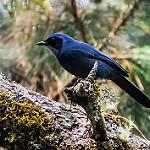
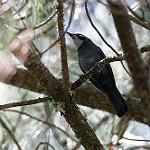
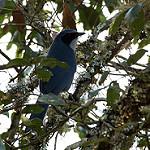
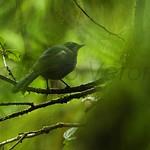
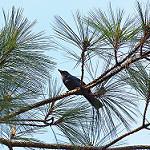
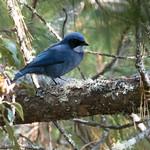
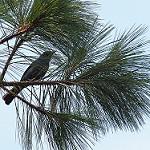
The Dwarf Jay (Cyanolyca nanus) is a small, brilliantly blue bird that inhabits the misty mountain forests of western Mexico. This elusive species is the smallest member of its genus and one of the least-known jays in the world, admired for its vivid plumage and secretive behavior.
Species Overview
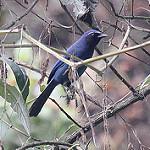
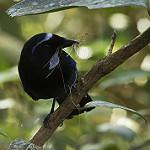
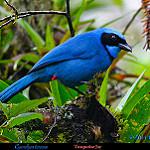
The Dwarf Jay measures about 20 cm in length and displays striking blue plumage with a darker cap and subtle violet tones on the chest. It resembles other Cyanolyca species but is noticeably smaller and lighter in color. Males and females look alike.
- Body length: around 20 cm
- Weight: 40–50 g
- Plumage: bright blue with a violet sheen, dark crown
- Sexual dimorphism: none
Habitat and Distribution
The Dwarf Jay is found exclusively in the cloud forests of southwestern Mexico, particularly in the states of Guerrero and Oaxaca. It prefers humid, densely vegetated mountain forests and is usually observed at elevations between 1,500 and 2,500 meters above sea level.
- Habitat: montane cloud forests
- Region: southwestern Mexico
- Elevation range: 1,500–2,500 m
- Behavior: secretive and hard to spot
Diet
The Dwarf Jay feeds primarily on insects, spiders, and other small invertebrates, supplemented by berries and fruits. It forages actively in the mid and upper canopy, moving nimbly through dense foliage.
- Main food: insects, spiders
- Additional diet: berries, small fruits
- Feeding type: omnivorous with an insect-based diet
Breeding
Little is known about the breeding habits of the Dwarf Jay. It likely nests in trees or dense undergrowth, building a small cup-shaped nest from moss and leaves. Breeding is believed to occur in spring, coinciding with peak insect abundance.
- Breeding season: spring
- Nest type: cup-shaped, made of moss and grass
- Clutch size: probably 2–3 eggs
Interesting Facts About the Dwarf Jay
- The smallest species in the genus Cyanolyca
- Extremely elusive — rarely seen even by ornithologists
- Has a soft, whistling call made up of short notes
- Prefers humid forests with dense canopy cover
Conservation and Threats
The Dwarf Jay is considered a vulnerable species due to its limited range and ongoing deforestation in its habitat. The main threats include logging and degradation of montane forests. However, in remote regions of Mexico, some populations remain relatively stable.
Call and Sounds
On this page, you can listen to the natural calls and songs of the Dwarf Jay (Cyanolyca nanus) without leaving the website.
Frequently Asked Questions About the Dwarf Jay
Where does the Dwarf Jay live?
The Dwarf Jay lives in the montane cloud forests of southwestern Mexico, mainly in the states of Guerrero and Oaxaca, between 1,500 and 2,500 meters above sea level.
What does the Dwarf Jay eat?
It feeds mainly on insects, spiders, and other invertebrates, occasionally eating berries and small fruits found in its forest habitat.
What does the Dwarf Jay look like?
This small bird measures about 20 cm, has bright blue plumage with a dark cap and violet tones on the chest. Males and females are similar in appearance.
Can I hear the Dwarf Jay’s call here?
Yes, the Dwarf Jay’s natural sounds and songs are available for listening directly on this page without linking to external sites.
- Old latin name for bird Cyanolyca nana, Cyanocorax nanus
Dwarf Jaybird sounds *
Related species
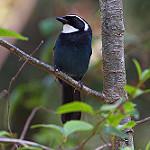
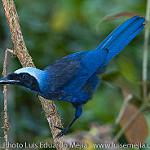
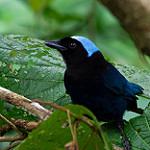

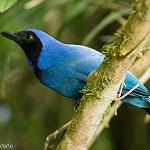


Where to see Dwarf Jay
- Breeding region Middle America
- Breeding subregion sw Mexico
Species Name in Other Languages
| Language | Translation |
|---|---|
| Azerbaijani | xırda Meksika zığ-zığı |
| Catalan | gaig menut |
| Chinese | 小蓝头鹊 |
| Chinese (Traditional) | 矮藍頭鵲 |
| Croatian | mala šojka |
| Czech | sojka malá |
| Danish | Dværgazurskade |
| Dutch | Witkeeldwerggaai |
| Esperanto | Nana garolo |
| Estonian | väike-sininäär |
| Finnish | pikkusininaakka |
| French | Geai nain, Geai minime, Geai-bleu nain |
| German | Zwerg-Häher, Zwerghäher |
| Hungarian | törpeszajkó |
| Italian | Ghiandaia nana |
| Japanese | ヒメアオカケス |
| Lithuanian | mažasis meksikinis kėkštas |
| Norwegian | dvergskrike |
| Norwegian Nynorsk | Dvergskrikje |
| Polish | modrowronka mala, modrowronka mała |
| Portuguese | gaio-anão |
| Russian | Малая разноцветная сойка, Малая мексиканская сойка, Карликовая сойка |
| Serbian | Patuljasta kreja |
| Slovak | kapuciarka malá |
| Spanish | Chara enana |
| Swedish | dvärgskrika |
| Turkish | Küçük Mavi Karga |
| Ukrainian | гагер малий |