Atlantic Puffin (Fratercula arctica) — the colorful parrot of the northern seas VU
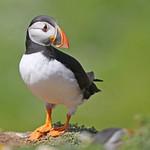
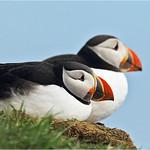
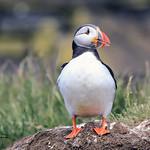
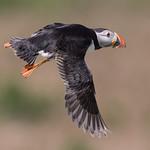
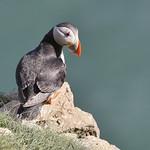
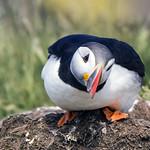
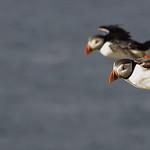
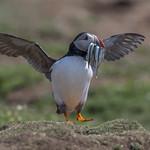
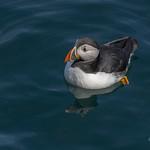
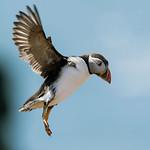
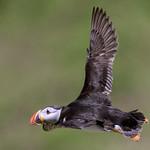
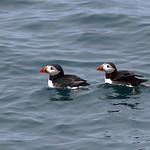
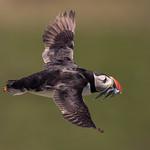
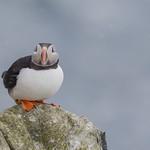
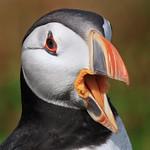
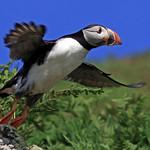
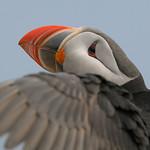
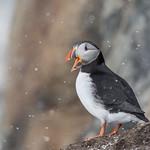
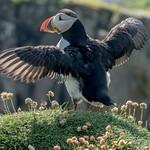
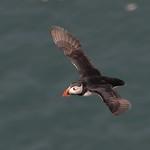
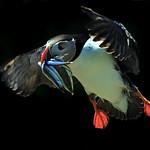
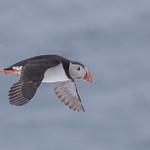
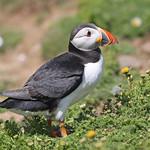
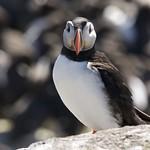
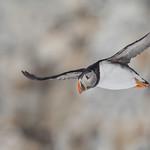
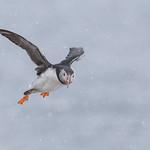
The Atlantic Puffin (Fratercula arctica) is one of the most recognizable seabirds of the North Atlantic. Its bright beak and striking black-and-white plumage make it a true symbol of the northern coasts. Because of its appearance and comical behavior, the puffin is often nicknamed the “clown of the sea” or “sea parrot.”
Description and Characteristics
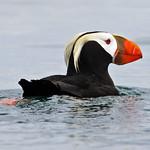
An adult puffin is about 30 cm (12 in) long with a wingspan of up to 60 cm (24 in) and weighs around 400–500 grams. Its iconic orange-red beak with blue and yellow accents becomes especially vivid during the breeding season. In winter, puffins lose much of their bright coloration and appear more grayish.
- Body length: 28–34 cm (11–13 in)
- Wingspan: up to 60 cm (24 in)
- Weight: around 0.5 kg (1.1 lb)
- Lifespan: up to 20 years
Habitat and Distribution
Puffins breed on rocky cliffs and islands across the North Atlantic — from Iceland and Norway to Newfoundland and the coasts of Canada. In Russia, small colonies exist on the Kola Peninsula and in the Barents Sea region.
- Main colonies: Iceland, Faroe Islands, Shetlands, and Orkneys
- Spend winters far offshore, rarely coming to land
- Prefer rocky coasts and grassy slopes near cliffs
Diet and Hunting
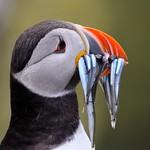
Puffins feed mostly on small fish such as sand eels, capelin, and herring. They catch prey by diving underwater, using their wings as flippers. Their beak is specially adapted to hold several fish at once.
- Main diet: small fish and crustaceans
- Can dive up to 60 meters (200 ft)
- Holds up to 10 fish in its beak at once
Breeding and Nesting
Puffins nest in burrows or rocky crevices, forming large colonies of thousands of pairs. Mates often reunite each year at the same nesting site. The female lays a single egg, which is incubated for about 40 days. The chick fledges around 6–7 weeks after hatching.
- Colonial breeders with dense nesting sites
- Parents feed chicks with freshly caught fish
- Chicks leave the nest at night, heading straight for the sea
Interesting Facts about Puffins
- Can reach speeds up to 80 km/h (50 mph) in flight
- Spend winters entirely at sea, resting on the waves
- Their bright beak fades after breeding season
- Young puffins return to breed only after several years at sea
Conservation and Population
While not yet endangered, puffin populations are declining due to overfishing, pollution, and climate change affecting fish availability. Iceland and Norway have implemented protection programs and regular population monitoring.
Listen to the Puffin’s Call
You can listen to recordings of the Atlantic Puffin (Fratercula arctica) right on this page — no need to visit external sources.
Frequently Asked Questions about Puffins
Where do puffins live?
Puffins live along the North Atlantic coasts — from Canada and Greenland to Iceland and Norway. In winter, they spend months far out at sea.
What do puffins eat?
Puffins mainly eat small fish, crustaceans, and marine worms. They catch their prey underwater using their wings for propulsion.
Why are puffins called sea parrots?
Their colorful beaks and contrasting plumage resemble that of tropical parrots, which earned them the nickname “sea parrots.”
How long do puffins live?
Atlantic Puffins typically live around 20 years, though some individuals have been recorded living up to 30 years.
- Synonyms Sea parrot, Large-billed Puffin, Common Puffin, Puffin
- Old latin name for bird Alca arctica, Mormon arcticus
Atlantic Puffinbird sounds *
Related species


Where to see Atlantic Puffin
- Breeding region Eurasia, North America
- Breeding subregion subarctic and temperate North Atlantic coasts: w, ec Greenland, Iceland, Faroe, British, and Channel is., nw France, s to n Scandinavia, Svalbard (n of Norway) and Novaya Zemlya (nw Russia); n Hudson Bay to se Canada and Maine (e Canada, ne USA)
- Non breeding region pelagic in North Atlantic and marginal seas, to North Carolina in Gulf Stream of w North Pacific and to Azores (n Macaronesia, nw of Africa) and Iberian Pen.
- Algeria
- Austria
- Belgium
- Bermuda
- Canada
- Croatia
- Cyprus
- Denmark
- Faroe Islands
- Finland
- France
- Germany
- Gibraltar
- Greenland
- Guernsey
- Hungary
- Iceland
- Ireland
- Isle of Man
- Israel
- Italy
- Jersey
- Lithuania
- Malta
- Monaco
- Morocco
- Netherlands
- Norway
- Poland
- Portugal
- Russia
- Saint Pierre and Miquelon
- Slovenia
- Spain
- Svalbard and Jan Mayen
- Sweden
- Tunisia
- United Kingdom
- United States of America
- Western Sahara
- Åland Islands
Species Name in Other Languages
| Language | Translation |
|---|---|
| Abkhazian | аБакәырқәа ᴘʟ, аБакәыр |
| Albanian | Sqeptrashi i detit verior |
| Azerbaijani | Atlantik kütdimdiyi |
| Basque | Fraret, Lanperna-musua, Lanperna-musu |
| Belarusian | Тупік |
| Bengali | িঅটরাচিক াচপন, াচপন |
| Breton | Poc'han boutin, Bohannig, Ar boc'anig boutin |
| Bulgarian | Тъпоклюна кайра, Обикновен тъпоклюн |
| Catalan | Cadafet, fraret atlàntic, Fraret |
| Chinese | 北极海鹦 |
| Chinese (Traditional) | 北極海鸚 |
| Chuvash | пуклак сăмса |
| Cornish | Nath |
| Croatian | tupik |
| Czech | papuchalk severní, Papuchalk belobradý, papuchalk plochozobý, Papuchalk ploskozobý |
| Danish | Lunde |
| Dutch | Papagaaiduiker, Papegaaiduiker |
| Esperanto | fraterkulo, Atlantika fraterkulo |
| Estonian | Lunn, lunn (põhjalunn), lunn e. põhjalunn |
| Faroese | Groddi, Lundi, Høga nevið, KarkareyðI, Karkarassur, Sildberi, Skarnstorkur |
| Finnish | lunni |
| French | Macareux arctique, Macareux moine |
| Frisian | Seepappegaai |
| Galician | Galo do mar común, Fraret, Arao papagaio |
| German | Papageitaucher |
| Greek | Θαλασσοψιττακός, Θαλασσoψιττακός |
| Hebrew | תוכים, תוכי-ים אטלנטי |
| Hungarian | lunda |
| Icelandic | Lundi |
| Inuktitut | Oilanngaq |
| Irish | Puifín |
| Italian | Pulcinella di mare, Polcinella di mare |
| Japanese | ニシツノメドリ |
| Kazakh | арктикалық балтатұмсық |
| Latvian | Atlantijas tuklītis |
| Lithuanian | Mormonas, atlantinis mormonas |
| Luxembourgish | Papageidaucher |
| Macedonian | Морски папагал |
| Maltese | Purcinell, Purċinell tal-Baħar |
| Manx | Poltrag, Pibbin |
| Northern Sami | Lunda, Bovttáš |
| Norwegian | Lunne, Lunn, lunde, Lundefugl |
| Norwegian Nynorsk | Lunde |
| Polish | maskonur, Alczyk, maskonur (zwyczajny), Maskonur zwyczajny, Traczyk |
| Portuguese | papagaio do mar, papagaio-do-mar-do-atlântico, Papagaio-do-mar |
| Romanian | Papagal de mare |
| Russian | Атлантический тупик, Тупик, Тупик обыкновенный, Tupik |
| Serbian | Морски папагај, Morski papagaj |
| Slovak | mníšik bielobradý, mníšik bielobradatý, Alka bielobradá, Mnâšik bielobradatý |
| Slovenian | mormon |
| Spanish | Frailecillo atlántico, Frailecilo Común, Frailecillo Común, Frailecillo |
| Swedish | lunnefågel |
| Turkish | deniz papağanı, Denizpapağanı |
| Ukrainian | іпатка атлантична |
| Uzbek | тупик |
| Welsh | Pal, Aderyn pâl, Pwffin, Pâl, Cornicyll y dŵr |